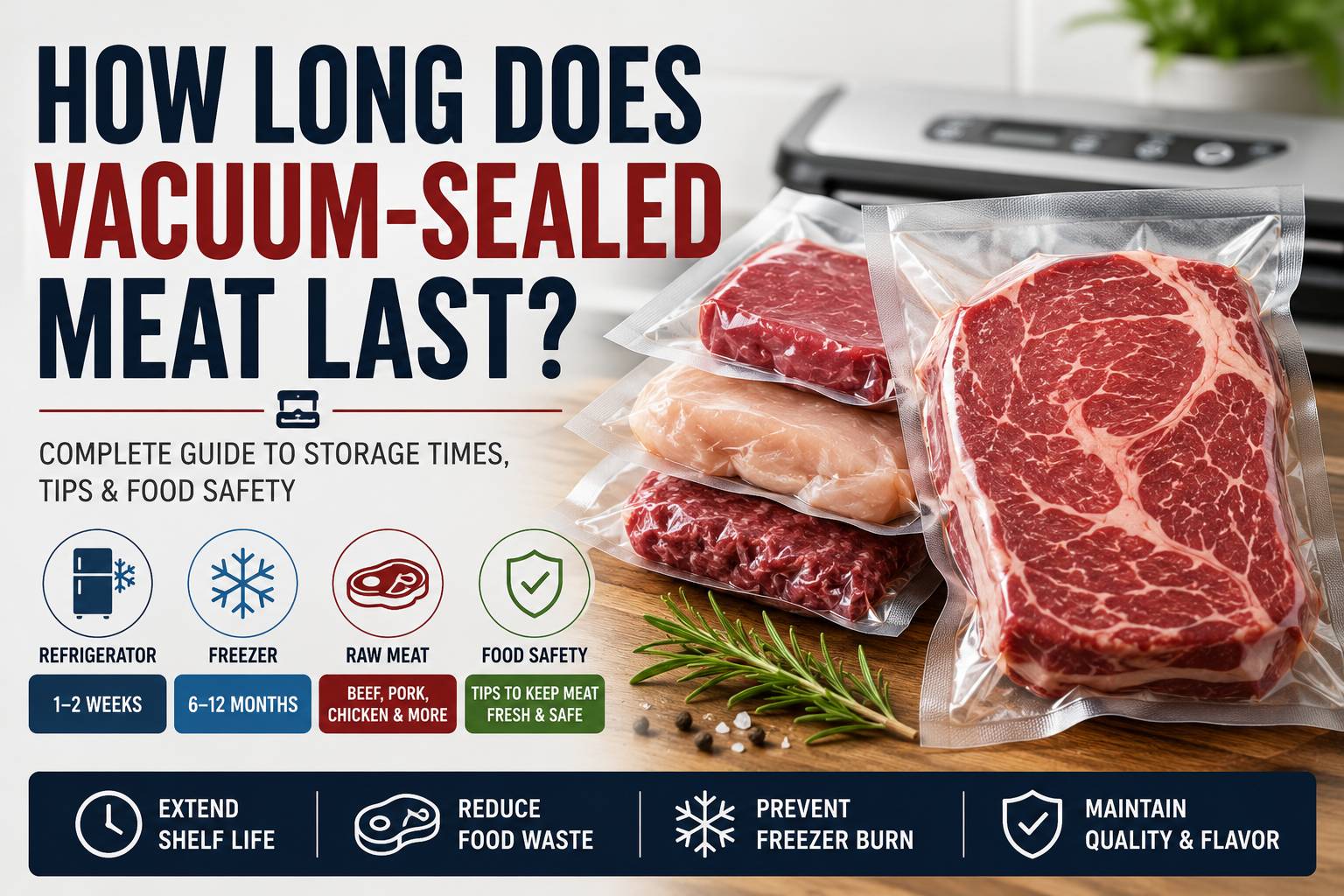
If you’re wondering How Long Does Vacuum-Sealed Meat Last?, the answer depends on the type of meat and how it is stored. Vacuum sealing helps extend shelf life by reducing air exposure, minimizing freezer burn, and preserving flavor and texture. However, proper refrigeration or freezing is still essential for food safety. In this guide, you’ll learn how long different types of vacuum-sealed meat last, the best storage methods, tips to maximize freshness, and the warning signs of spoilage so you can store meat safely and confidently.
Table of Contents
Quick Answer
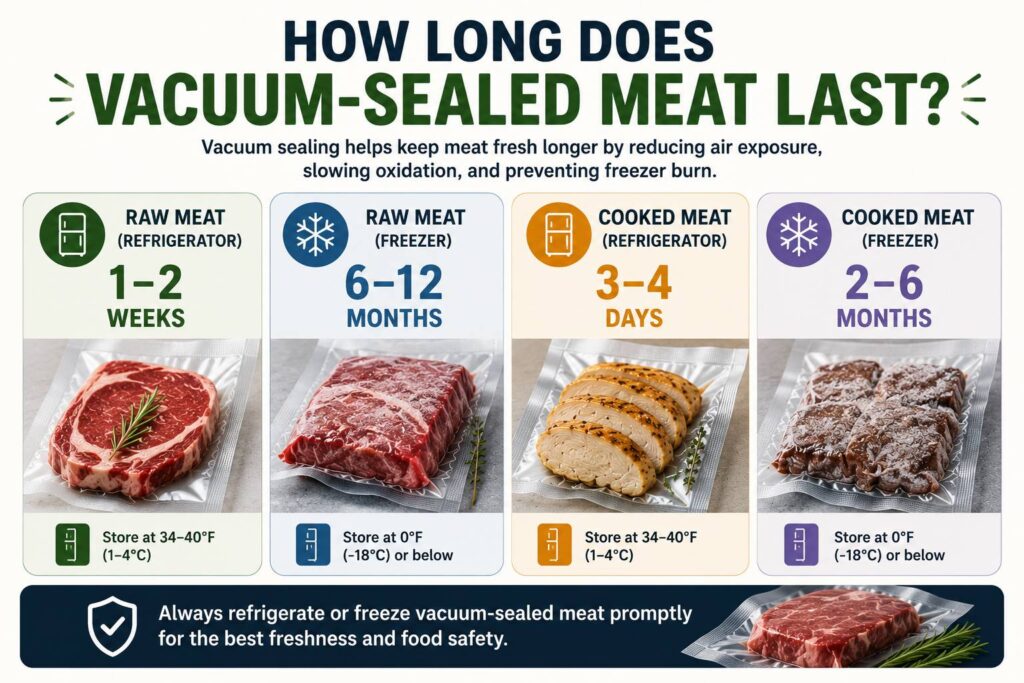
How Long Does Vacuum-Sealed Meat Last? Vacuum-sealed meat can last significantly longer than meat stored in regular packaging. In general, vacuum-sealed raw meat can stay fresh for 1–2 weeks in the refrigerator and 6–12 months in the freezer, while vacuum-sealed cooked meat typically lasts 3–4 days in the refrigerator and 2–6 months in the freezer when stored properly.
Vacuum sealing helps extend shelf life by reducing air exposure, slowing oxidation, and minimizing freezer burn. However, proper refrigeration or freezing is still essential to maintain food safety and quality.
In this guide, you’ll learn how long different types of vacuum-sealed meat last, the best storage methods, tips to maximize freshness, and the warning signs that meat has gone bad.
Why Does Vacuum-Sealed Meat Last Longer?
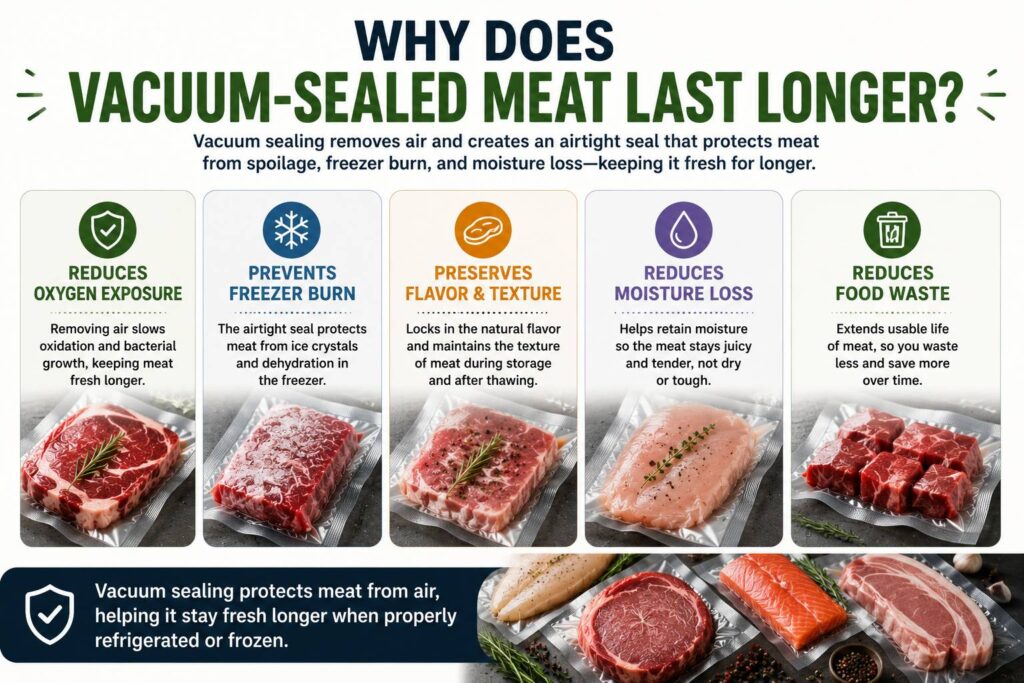
Vacuum sealing extends the shelf life of meat by removing most of the air surrounding it. Since oxygen speeds up oxidation and bacterial growth, reducing air exposure helps keep meat fresh for a longer period. If you’re wondering How Long Does Vacuum-Sealed Meat Last?, proper vacuum sealing is one of the biggest factors that affects storage time.
Here are the main reasons vacuum-sealed meat lasts longer:
- Reduces oxygen exposure, slowing oxidation and spoilage.
- Helps prevent freezer burn by protecting the meat from air.
- Preserves flavor and texture during refrigerator and freezer storage.
- Reduces moisture loss, helping meat stay juicy after thawing.
- Minimizes food waste by extending the usable storage time.
While vacuum sealing significantly improves freshness, it does not eliminate the need for proper refrigeration or freezing. Storing vacuum-sealed meat at the correct temperature is essential for both food safety and quality.
How Long Does Vacuum-Sealed Meat Last?
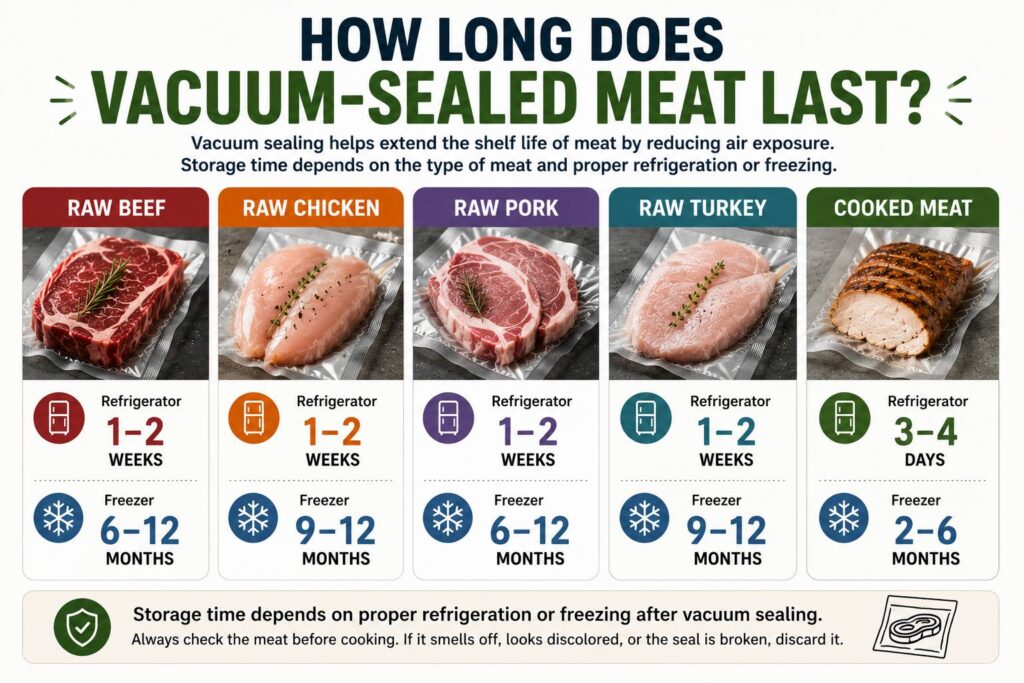
If you’re wondering How Long Does Vacuum-Sealed Meat Last?, the answer depends on the type of meat and how it is stored. Vacuum sealing helps extend shelf life by reducing air exposure, but proper refrigeration or freezing is still essential for food safety.
The table below shows the typical storage times for vacuum-sealed meat.
| Meat Type | Refrigerator | Freezer |
|---|---|---|
| Raw Beef | 1–2 weeks | 6–12 months |
| Raw Chicken | 1–2 weeks | 9–12 months |
| Raw Pork | 1–2 weeks | 6–12 months |
| Raw Turkey | 1–2 weeks | 9–12 months |
| Cooked Meat | 3–4 days | 2–6 months |
For the best quality, keep vacuum-sealed meat refrigerated if you plan to use it soon. For long-term storage, freeze the meat immediately after sealing to help preserve flavor, texture, and freshness.
Although vacuum sealing significantly extends storage time, always inspect the meat before cooking. If you notice an unusual odor, discoloration, excessive liquid, or a damaged seal, discard the meat for safety.
Storage Time by Meat Type
Although the general guidelines answer How Long Does Vacuum-Sealed Meat Last?, the actual storage time varies depending on the type of meat. Different meats have different moisture and fat contents, which can affect how long they stay fresh. Below are the typical storage times for the most common types of vacuum-sealed meat.
Beef
Vacuum-sealed beef has one of the longest storage times. When refrigerated, it typically stays fresh for 1–2 weeks. For long-term storage, frozen vacuum-sealed beef can maintain its best quality for 6–12 months.
Chicken
Vacuum-sealed chicken can be safely stored in the refrigerator for 1–2 weeks. If frozen immediately after sealing, it usually stays at its best quality for 9–12 months.
Pork
Vacuum-sealed pork generally lasts 1–2 weeks in the refrigerator and 6–12 months in the freezer. Proper sealing helps reduce freezer burn and preserve flavor.
Turkey
Vacuum-sealed turkey can remain fresh for 1–2 weeks in the refrigerator. For longer storage, freezing extends its shelf life to approximately 9–12 months.
Cooked Meat
Vacuum-sealed cooked meat has a shorter refrigerator life than raw meat. It typically lasts 3–4 days in the refrigerator and 2–6 months in the freezer. Always let cooked meat cool completely before vacuum sealing to maintain food safety and quality.
How to Maximize the Shelf Life of Vacuum-Sealed Meat
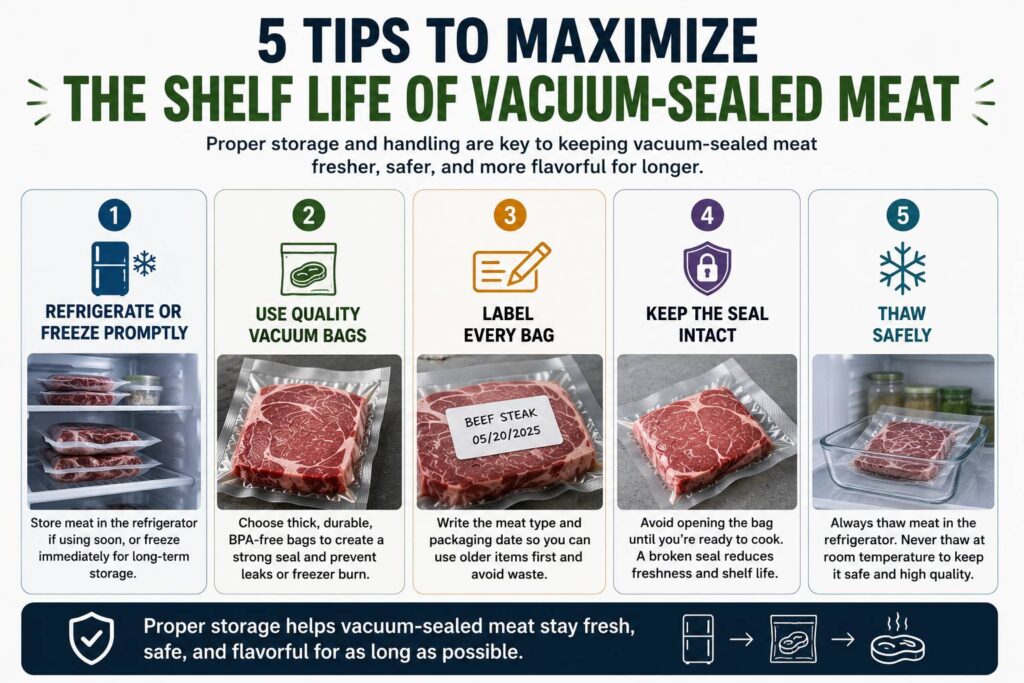
If you’re wondering How Long Does Vacuum-Sealed Meat Last?, proper storage habits are just as important as vacuum sealing itself. Following a few simple practices can help maximize freshness, reduce food waste, and keep meat safe to eat.
Keep Meat Refrigerated or Frozen
Store vacuum-sealed meat in the refrigerator if you plan to use it within a few days. For long-term storage, place it in the freezer immediately after sealing to preserve quality and extend shelf life.
Use High-Quality Vacuum Sealer Bags
Choose durable, BPA-free vacuum sealer bags that create a strong airtight seal. High-quality bags help prevent leaks, freezer burn, and moisture loss during storage.
Label Every Bag with the Date
Always write the packaging date and the type of meat on each vacuum-sealed bag. Labeling makes it easy to use older items first and avoid keeping meat longer than recommended.
Avoid Breaking the Vacuum Seal
Do not open the vacuum-sealed bag until you’re ready to cook or use the meat. A damaged or broken seal allows air to enter, reducing freshness and shortening storage time.
Thaw Meat Safely
Always thaw frozen vacuum-sealed meat in the refrigerator. Avoid thawing meat at room temperature, as this can increase the risk of bacterial growth and reduce food safety.
By following these simple storage practices, How Long Does Vacuum-Sealed Meat Last? becomes less of a concern because your meat will stay fresher, safer, and maintain better quality for longer.
Signs Vacuum-Sealed Meat Has Gone Bad
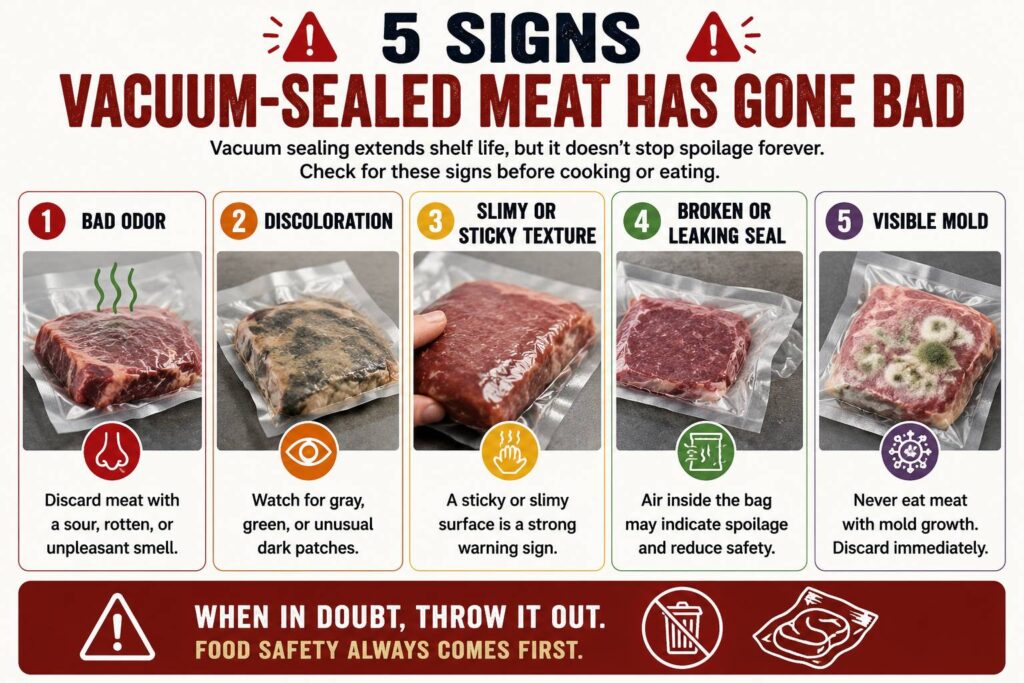
Even if you know How Long Does Vacuum-Sealed Meat Last?, it’s important to inspect the meat before cooking or eating. Vacuum sealing extends shelf life, but it does not stop spoilage forever. If you notice any of the following signs, discard the meat immediately.
Bad Odor
Fresh vacuum-sealed meat should have little or no odor. If the meat smells sour, rotten, or unpleasant after opening the bag, it is no longer safe to eat.
Discoloration
Some color changes can be normal after vacuum sealing, but meat that turns gray, green, or develops unusual dark patches may have spoiled. Always inspect the meat carefully before cooking.
Slimy or Sticky Texture
If the surface of the meat feels slimy, sticky, or excessively tacky after opening the package, it is a strong sign of spoilage.
Broken or Leaking Vacuum Seal
A damaged vacuum bag allows air and bacteria to enter, reducing freshness and shortening storage life. If the seal is broken or the bag has leaked, do not rely on the original storage time.
Mold Growth
Any visible mold on vacuum-sealed meat means the product should be discarded immediately. Never cut away the mold and continue using the remaining meat.
Remember, How Long Does Vacuum-Sealed Meat Last? is only a general guideline. Always use your senses and inspect the meat carefully before cooking to ensure both quality and food safety.
Frequently Asked Questions
How Long Does Vacuum-Sealed Meat Last in the Refrigerator?
How Long Does Vacuum-Sealed Meat Last? Most raw vacuum-sealed meat stays fresh for 1–2 weeks in the refrigerator, while cooked vacuum-sealed meat typically lasts 3–4 days. Always keep meat refrigerated at or below 40°F (4°C).
How Long Does Vacuum-Sealed Meat Last in the Freezer?
Vacuum-sealed meat can last much longer in the freezer. Raw beef and pork generally keep for 6–12 months, while chicken and turkey can maintain their best quality for 9–12 months. Cooked meat is best used within 2–6 months.
Can Vacuum-Sealed Meat Go Bad?
Yes. Vacuum sealing slows spoilage but does not stop it completely. If the meat develops a sour odor, unusual discoloration, a slimy texture, or the vacuum seal is damaged, it should be discarded.
Does Vacuum Sealing Make Meat Last Longer?
Yes. Vacuum sealing removes most of the air around the meat, helping reduce oxidation, moisture loss, and freezer burn. Combined with proper refrigeration or freezing, it significantly extends the shelf life of meat.
Can You Refreeze Vacuum-Sealed Meat?
Yes, if the meat has been thawed safely in the refrigerator and has not been left at room temperature for an extended period. Refreezing may slightly reduce texture and quality, but it is generally safe when handled properly.
Final Verdict
How Long Does Vacuum-Sealed Meat Last? When stored properly, vacuum-sealed meat lasts significantly longer than meat in regular packaging. Raw vacuum-sealed meat can typically stay fresh for 1–2 weeks in the refrigerator and 6–12 months in the freezer, while cooked meat generally lasts 3–4 days in the refrigerator and 2–6 months in the freezer.
To maximize shelf life, always use high-quality vacuum sealer bags, keep meat refrigerated or frozen immediately after sealing, label each package with the storage date, and inspect the meat for signs of spoilage before cooking. Proper storage not only helps maintain flavor and texture but also reduces food waste and improves food safety.
If you want to learn more about vacuum sealing different foods, explore our related guides:
- 🍖 Can You Vacuum Seal Cooked Meat?
- 🍞 Can You Vacuum Seal Bread?
- 🥬 Can You Vacuum Seal Lettuce?
- 🧀 Can You Vacuum Seal Cheese?
- 🫕Can You Vacuum Seal Liquids
By following these best practices, you’ll know exactly How Long Does Vacuum-Sealed Meat Last and how to keep your meat fresh, safe, and ready to use whenever you need it.