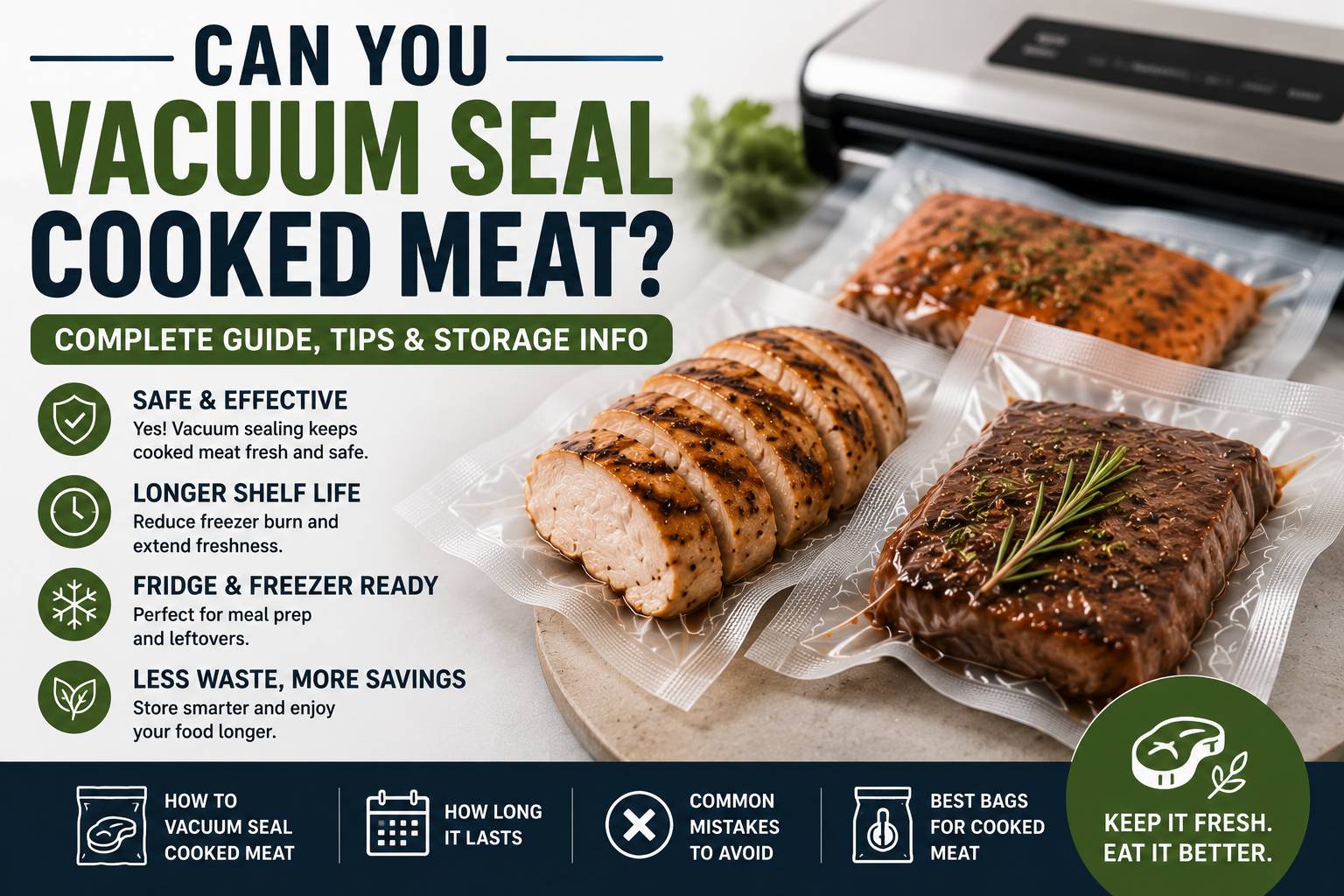
If you’ve ever wondered, Can You Vacuum Seal Cooked Meat? The answer is yes. Vacuum sealing is an effective way to keep cooked meat fresh longer, reduce freezer burn, and make meal prep more convenient. However, using the correct storage methods is essential for maintaining food safety and preserving flavor. In this guide, you’ll learn which cooked meats can be vacuum sealed, how to seal them properly, how long they last, common mistakes to avoid, and how to choose the best vacuum sealer bags for the best results.
Table of Contents
Quick Answer
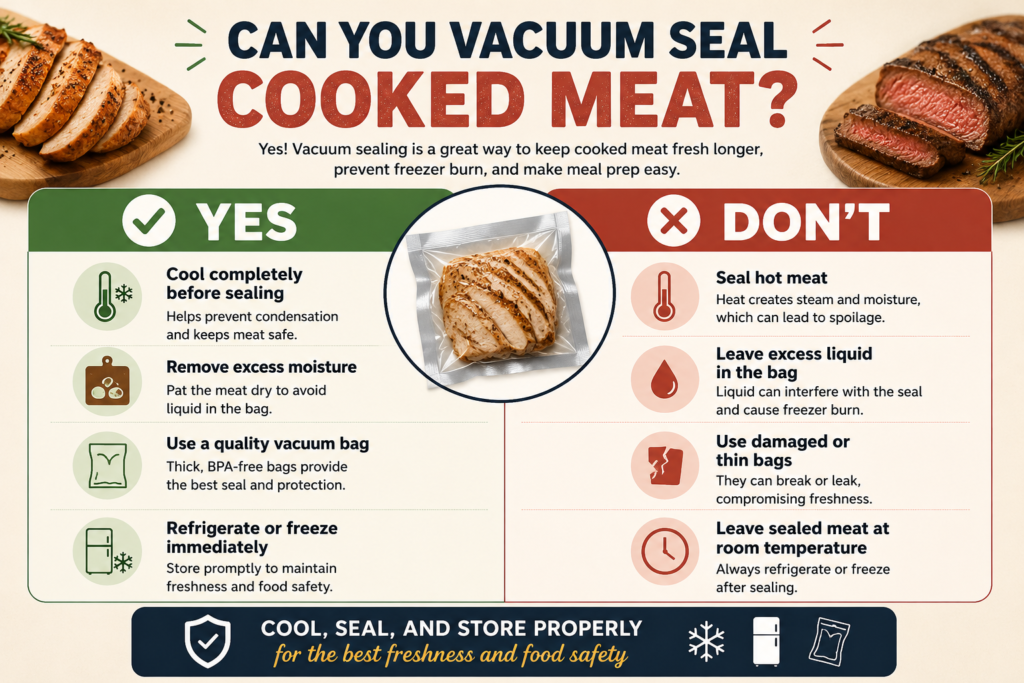
Can You Vacuum Seal Cooked Meat? Yes. Vacuum sealing is one of the best ways to keep cooked meat fresh longer by reducing air exposure and helping prevent freezer burn. Whether it’s chicken, beef, pork, turkey, or ham, properly vacuum-sealed cooked meat can be stored safely in the refrigerator or freezer for extended freshness.
For the best results, allow the meat to cool completely before sealing, remove excess moisture, and use a high-quality vacuum sealer bag. Proper storage after sealing is just as important for maintaining flavor, texture, and food safety.
If done correctly, Can You Vacuum Seal Cooked Meat is a simple way to reduce food waste, simplify meal prep, and preserve cooked meals for future use.
Why Vacuum Seal Cooked Meat?
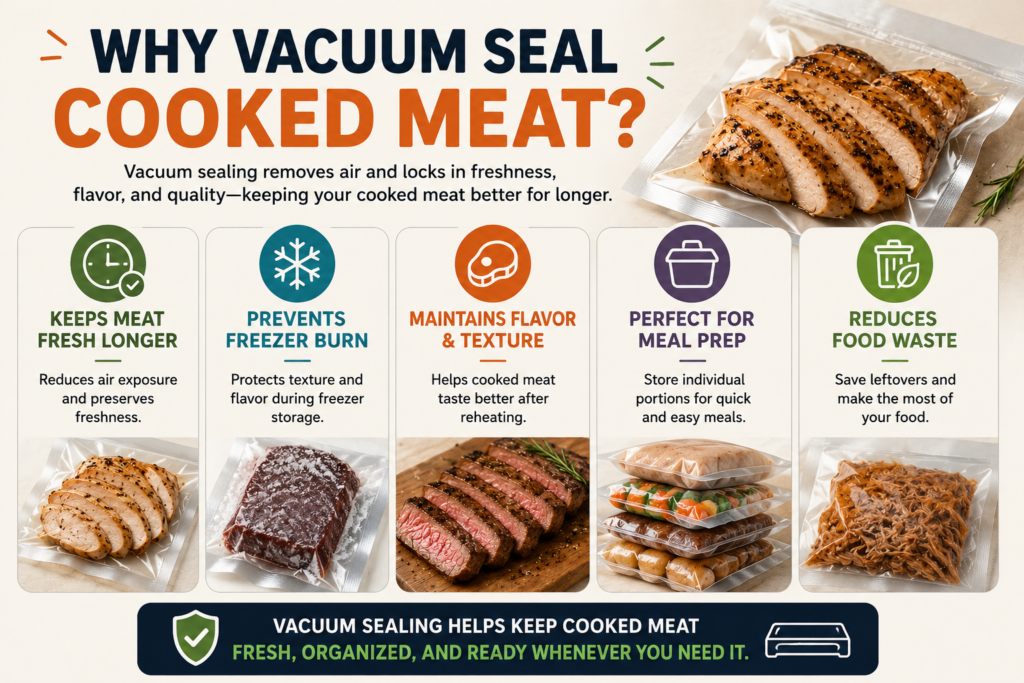
If you’re wondering Can You Vacuum Seal Cooked Meat, the biggest benefit is extending freshness while protecting the quality of your cooked meals. Vacuum sealing removes most of the air around the meat, helping reduce oxidation, minimize freezer burn, and preserve flavor and texture.
Here are the main benefits of vacuum sealing cooked meat:
- Keeps cooked meat fresh longer by reducing air exposure.
- Helps prevent freezer burn during long-term freezer storage.
- Reduces food waste by extending the usable life of leftovers.
- Makes meal prep easier with ready-to-use portions.
- Saves freezer space by storing meat in compact, airtight bags.
Whether you’re storing grilled chicken, roasted beef, pulled pork, turkey, or leftover ham, Can You Vacuum Seal Cooked Meat is a practical way to keep cooked meals organized, safe, and ready to enjoy later.
Which Types of Cooked Meat Can You Vacuum Seal?
If you’re wondering Can You Vacuum Seal Cooked Meat, the good news is that most cooked meats are excellent candidates for vacuum sealing. As long as the meat has cooled completely before sealing, vacuum sealing can help preserve freshness, flavor, and texture during storage.
🍗 Chicken
Cooked chicken is one of the best foods to vacuum seal. Whether grilled, roasted, or shredded, vacuum sealing helps keep chicken fresh longer and makes meal prep more convenient.
🥩 Beef
Cooked beef, including steaks, roast beef, and ground beef, can be vacuum sealed successfully. Removing air helps protect the meat from freezer burn and preserves its rich flavor.
🍖 Pork
Cooked pork, such as pork chops, pulled pork, or pork loin, stores well in vacuum-sealed bags. Portioning the meat before sealing makes reheating easier.
🦃 Turkey
Vacuum sealing is a great way to store leftover turkey after holidays or meal prep. It helps maintain moisture and keeps the meat ready for future meals.
🍖 Ham
Sliced or whole cooked ham can be vacuum sealed for both refrigerator and freezer storage. Proper sealing helps reduce moisture loss and extends freshness.
🔥 BBQ & Smoked Meat
Brisket, ribs, smoked chicken, and pulled pork are excellent choices for vacuum sealing. Vacuum-sealed BBQ retains its smoky flavor and reheats well when stored properly.
Most cooked meats can be safely stored using this method, making Can You Vacuum Seal Cooked Meat an easy solution for reducing food waste and organizing leftovers.
Cool cooked meat completely before vacuum sealing for the best freshness and food safety.
How to Vacuum Seal Cooked Meat
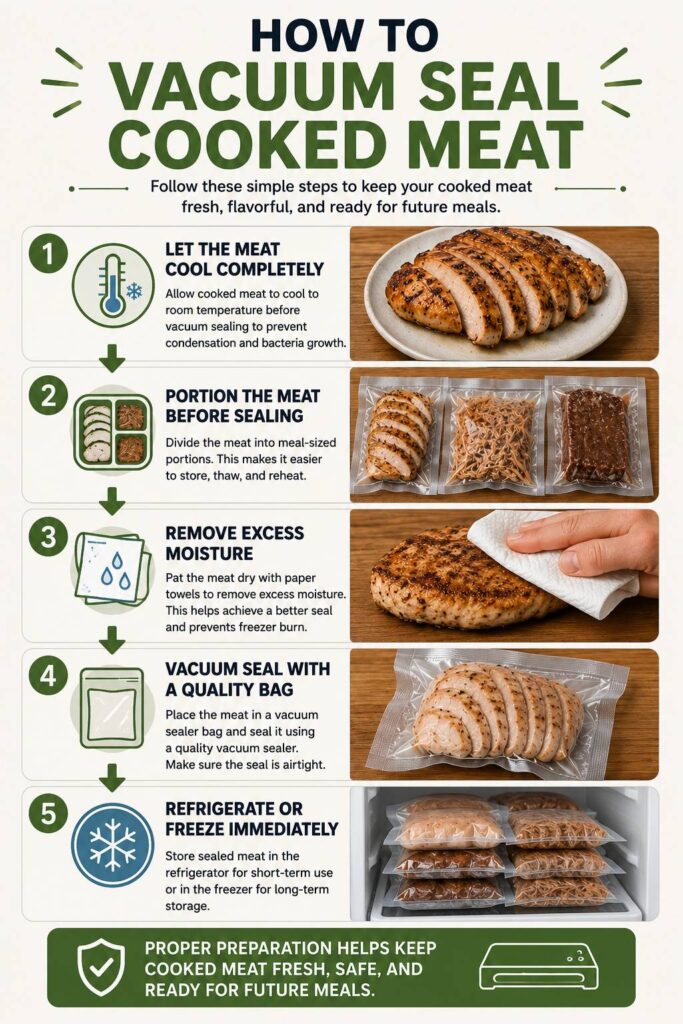
If you’re asking Can You Vacuum Seal Cooked Meat, following the correct steps is essential for maintaining freshness, flavor, and food safety. Proper preparation before sealing helps prevent excess moisture, freezer burn, and bacterial growth.
Start by letting the meat cool completely, divide it into meal-sized portions, remove any excess moisture, and seal it in a high-quality vacuum bag. Once sealed, refrigerate or freeze the meat promptly to keep it fresh for as long as possible.
The following step-by-step guide will help you vacuum seal cooked meat safely and effectively.
How Long Does Vacuum-Sealed Cooked Meat Last?
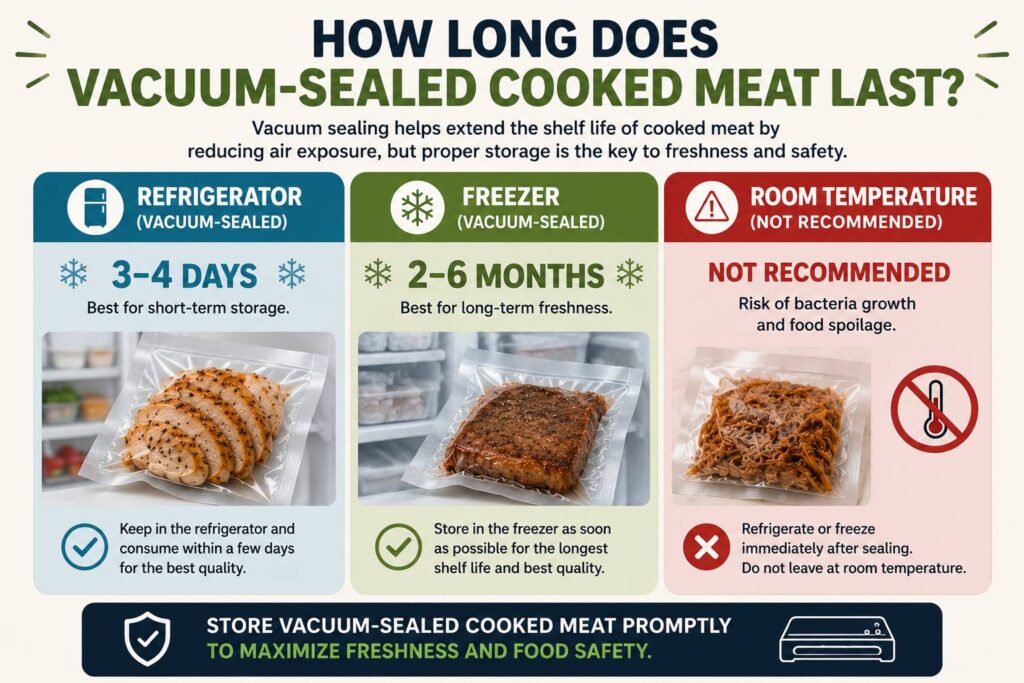
If you’re asking Can You Vacuum Seal Cooked Meat, proper storage temperature has the biggest impact on how long it stays fresh. Vacuum sealing helps extend shelf life by reducing air exposure, but the meat should always be refrigerated or frozen promptly after sealing.
Storage Method| Expected Storage Time
Refrigerator (Vacuum-Sealed)| 3–4 days
Freezer (Vacuum-Sealed)| 2–6 months
Room Temperature| Not recommended
For the best quality, refrigerate vacuum-sealed cooked meat if you plan to eat it within a few days. For long-term storage, place it in the freezer as soon as possible after sealing. Always thaw frozen cooked meat safely in the refrigerator before reheating.
When stored correctly, Can You Vacuum Seal Cooked Meat is an effective way to preserve leftovers, simplify meal prep, and reduce food waste while maintaining flavor and texture.
Common Mistakes When Vacuum Sealing Cooked Meat
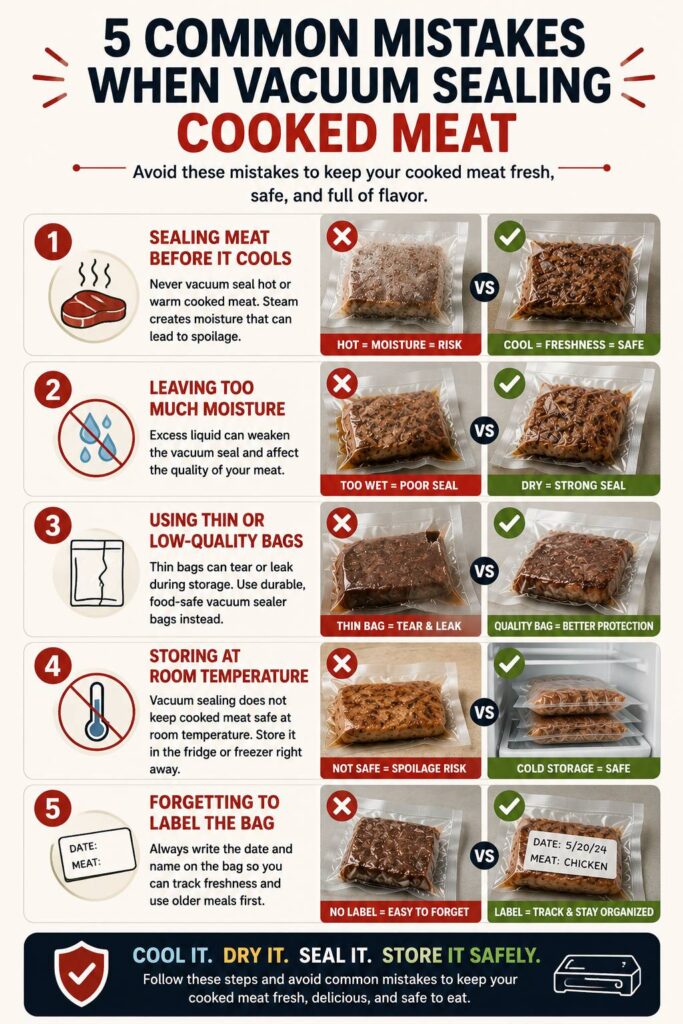
If you’re wondering Can You Vacuum Seal Cooked Meat, avoiding a few common mistakes can make a big difference in freshness, food safety, and storage quality. Follow these tips to get the best results every time.
Sealing Meat Before It Cools
Never vacuum seal hot or warm cooked meat. Warm meat releases steam inside the bag, creating moisture that can reduce freshness and affect food safety. Always let the meat cool completely before sealing.
Leaving Too Much Moisture
Excess liquid inside the bag can weaken the vacuum seal and affect storage quality. Pat the cooked meat dry with a paper towel before vacuum sealing whenever possible.
Using Thin or Low-Quality Bags
Thin bags are more likely to tear or leak during storage. Choose durable, food-safe vacuum sealer bags designed for refrigerator and freezer use.
Storing at Room Temperature
Vacuum sealing does not make cooked meat safe to leave on the counter. Refrigerate or freeze the sealed meat immediately after packaging.
Forgetting to Label the Bag
Always write the storage date and food name on each vacuum-sealed bag. Labeling makes it easier to track freshness and use older meals first.
By avoiding these mistakes, Can You Vacuum Seal Cooked Meat becomes a safe and effective way to preserve leftovers, simplify meal prep, and reduce food waste.
Best Vacuum Sealer Bags for Cooked Meat
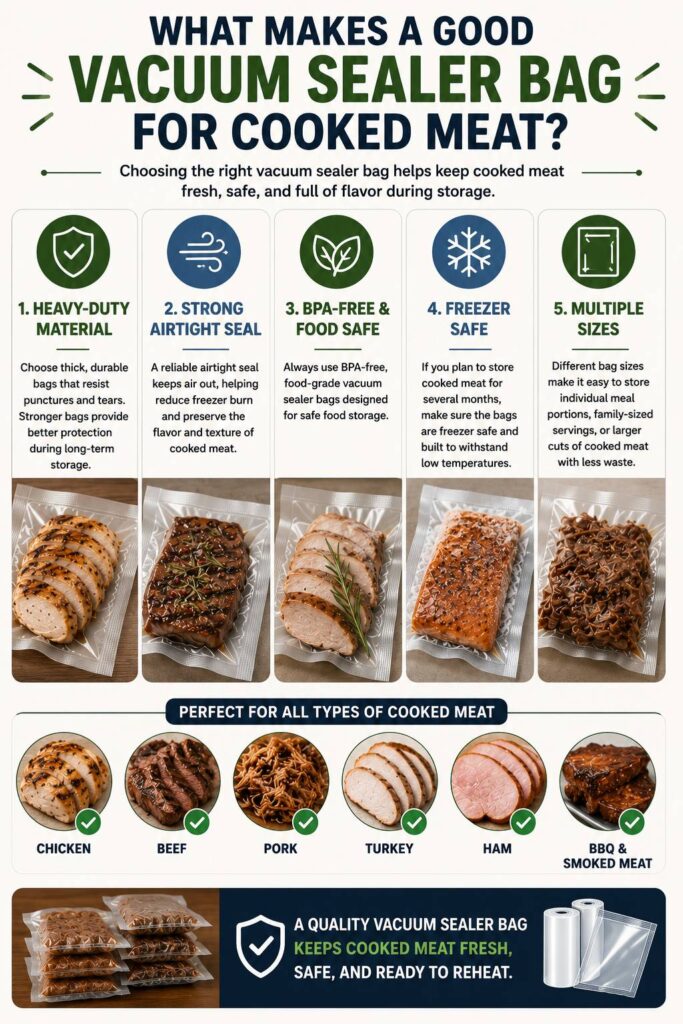
If you’re asking Can You Vacuum Seal Cooked Meat, choosing the right vacuum sealer bag is just as important as using the correct sealing method. A high-quality bag helps maintain freshness, prevents leaks, and protects cooked meat during refrigerator or freezer storage.
Here are the key features to look for:
Heavy-Duty Material
Choose thick, durable bags that resist punctures and tears. Stronger bags provide better protection during long-term storage.
Strong Airtight Seal
A reliable airtight seal keeps air out, helping reduce freezer burn and preserve the flavor and texture of cooked meat.
BPA-Free & Food Safe
Always use BPA-free, food-grade vacuum sealer bags designed for safe food storage.
Freezer Safe
If you plan to store cooked meat for several months, make sure the bags are freezer safe and built to withstand low temperatures.
Multiple Sizes Available
Different bag sizes make it easy to store individual meal portions, family-sized servings, or larger cuts of cooked meat while reducing wasted bag material.
Using the right vacuum sealer bag makes Can You Vacuum Seal Cooked Meat even more effective by protecting freshness, improving storage quality, and making meal prep more convenient.
Frequently Asked Questions
Can You Vacuum Seal Cooked Meat Safely?
Yes. Can You Vacuum Seal Cooked Meat? Absolutely. Let the meat cool completely before sealing, use a food-safe vacuum bag, and refrigerate or freeze it immediately after sealing.
How Long Does Vacuum-Sealed Cooked Meat Last?
Vacuum-sealed cooked meat typically lasts 3–4 days in the refrigerator and 2–6 months in the freezer when stored properly. Always check for signs of spoilage before eating.
Can You Freeze Vacuum-Sealed Cooked Meat?
Yes. Freezing is one of the best ways to store vacuum-sealed cooked meat for long-term freshness. Properly sealed meat is less likely to develop freezer burn.
Can You Reheat Vacuum-Sealed Cooked Meat?
Yes. Thaw frozen cooked meat in the refrigerator before reheating. Heat it thoroughly until it reaches a safe serving temperature before eating.
What Is the Best Way to Vacuum Seal Cooked Meat?
The best method is to let the meat cool completely, remove excess moisture, portion it into meal-sized servings, seal it with a high-quality vacuum bag, and refrigerate or freeze it immediately.
Final Verdict
Final Verdict
Can You Vacuum Seal Cooked Meat? Yes. Vacuum sealing is one of the most effective ways to keep cooked meat fresh longer, reduce freezer burn, and make meal prep more convenient. When done correctly, it also helps minimize food waste while preserving flavor and texture.
For the best results, let the meat cool completely before sealing, remove excess moisture, use a high-quality vacuum sealer bag, and refrigerate or freeze it immediately after sealing. Proper storage is essential for maintaining both freshness and food safety.
If you want to learn more about vacuum sealing different foods, explore our related guides:
- 🍞 Can You Vacuum Seal Bread?
- 🥬 Can You Vacuum Seal Lettuce?
- 🧀 Can You Vacuum Seal Cheese?
- 🫕Can You Vacuum Seal Liquids?
Explore more vacuum sealing guides on FindLab Pick and discover the best storage tips for everyday foods.
By following the right techniques, Can You Vacuum Seal Cooked Meat becomes a simple and reliable way to store leftovers, prepare meals in advance, and keep cooked meat fresh whenever you need it.