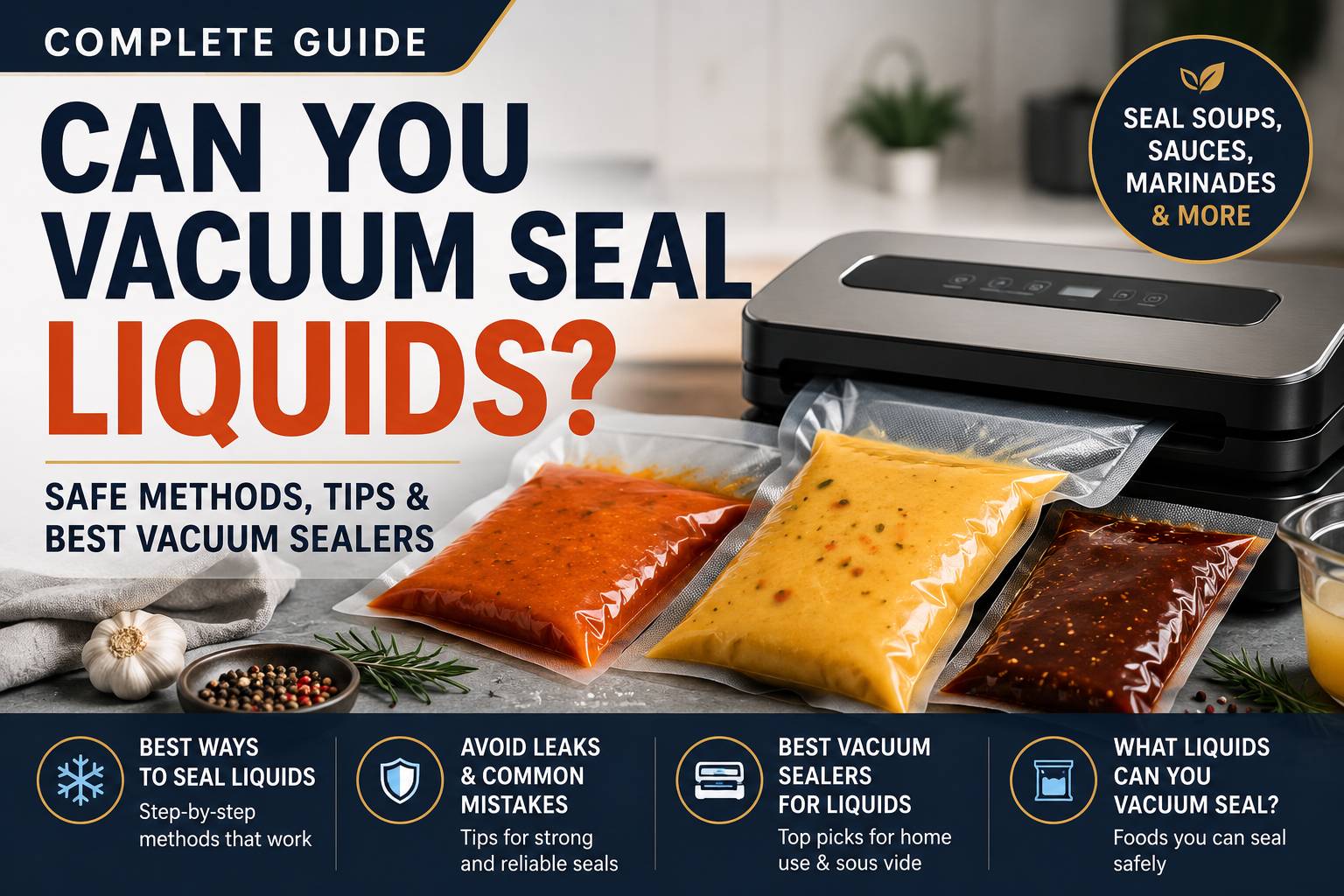
Wondering Can You Vacuum Seal Liquids? (Complete Guide)? The answer is yes—but using the wrong method can lead to leaks, weak seals, or even damage to your vacuum sealer. In this guide, you’ll learn the safest ways to vacuum seal soups, sauces, marinades, and other liquids, common mistakes to avoid, and how to choose the best vacuum sealer for reliable results.
Table of Contents
Why Are Liquids Difficult to Vacuum Seal?
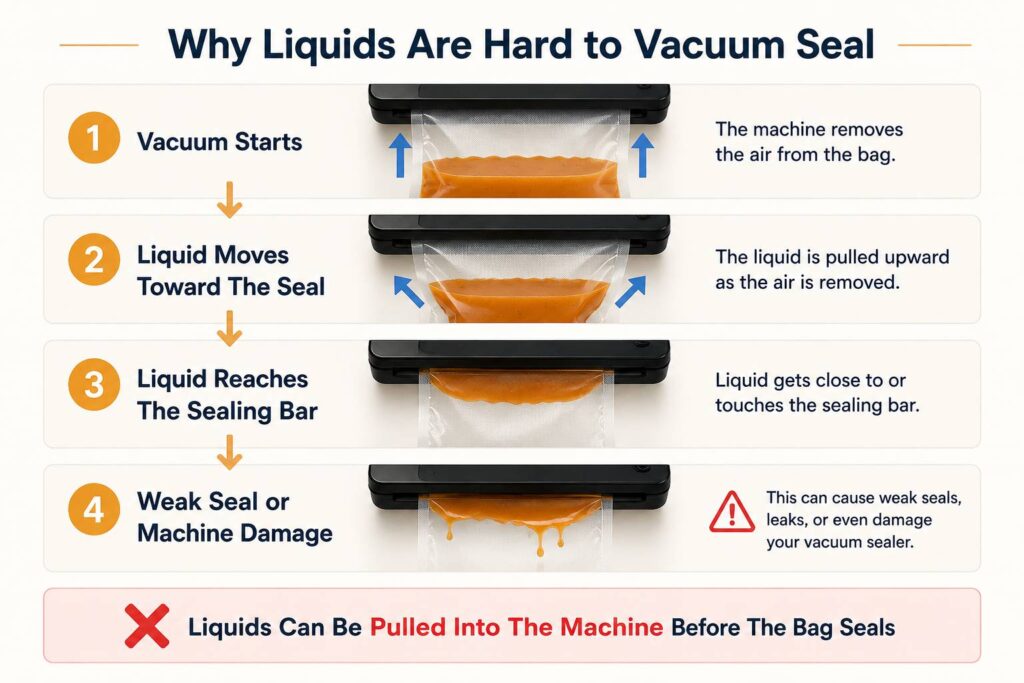
If you’re wondering Can You Vacuum Seal Liquids? (Complete Guide), it’s important to understand why liquids are different from solid foods. During the vacuum sealing process, the machine removes air from the bag. Since liquids flow easily, they can be pulled toward the sealing bar before the bag is completely sealed.
This can lead to weak seals, liquid entering the vacuum sealer, and shorter food storage life. In some cases, excess liquid may even damage the machine. Fortunately, using the right sealing method can prevent these problems and make vacuum sealing liquids safe and effective.
Best Ways to Vacuum Seal Liquids
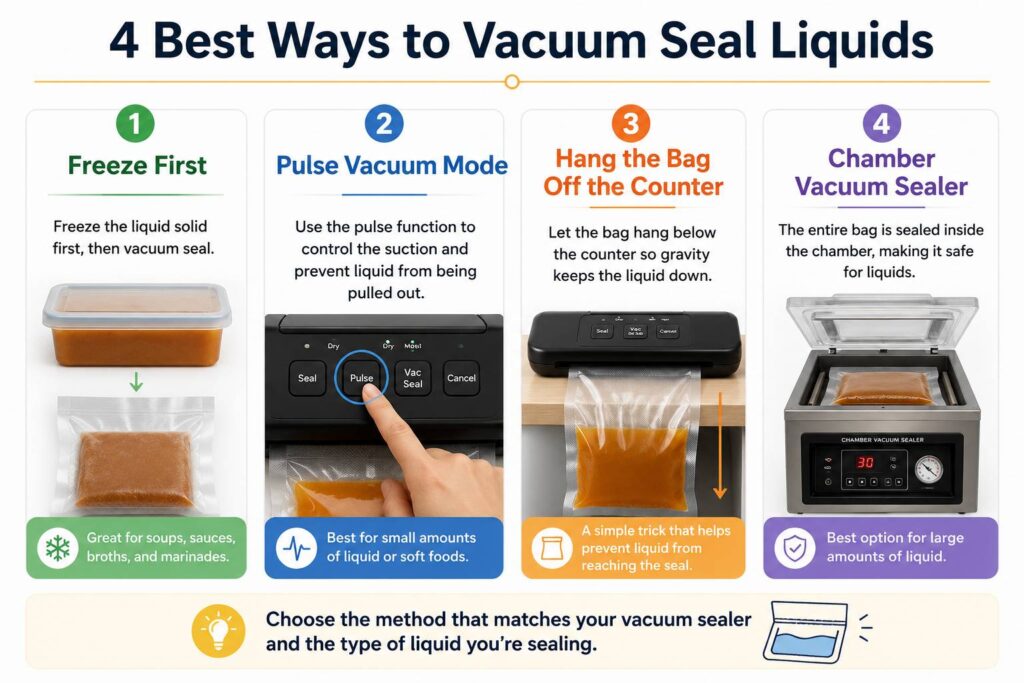
If you’re wondering Can You Vacuum Seal Liquids? (Complete Guide), the answer is yes—but using the right method is essential. Unlike solid foods, liquids can easily be pulled toward the sealing bar during the vacuum process, leading to weak seals, leaks, or even damage to the machine.
Fortunately, there are several safe and effective ways to vacuum seal liquids. The best method depends on the type of liquid, your vacuum sealer, and how often you plan to preserve soups, sauces, marinades, or other liquid-based foods.
Below are the most reliable methods, along with when to use each one.
Freeze Liquids Before Vacuum Sealing
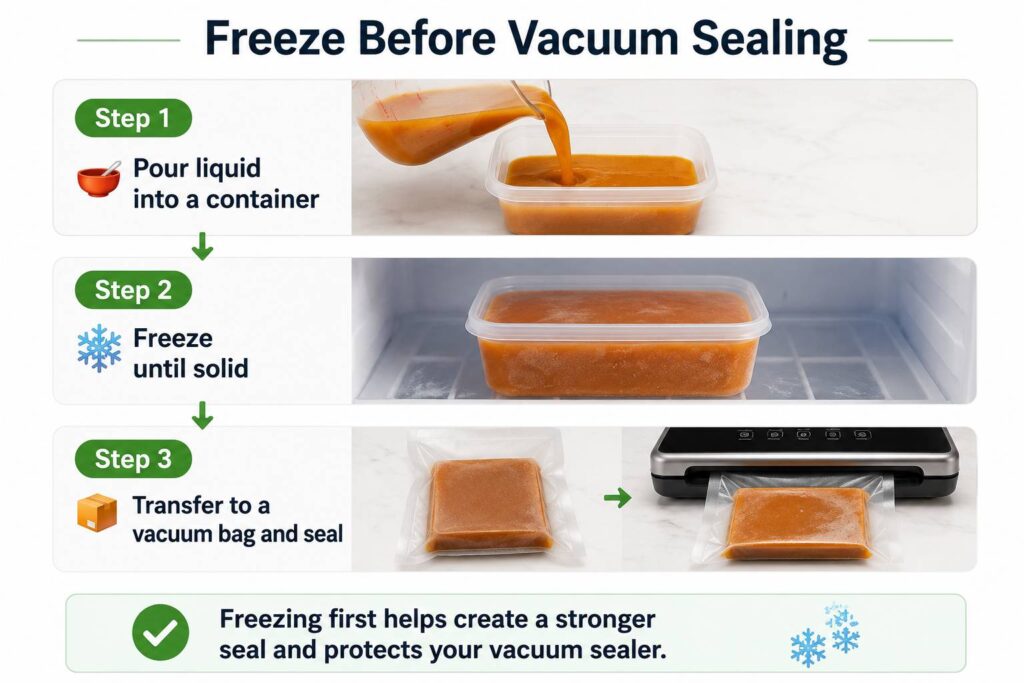
Freezing liquids before vacuum sealing is the easiest and most reliable method for most home users. Once the liquid is completely frozen, it behaves like a solid, preventing it from being pulled toward the sealing bar during the vacuum process.
If you’re following this Can You Vacuum Seal Liquids? (Complete Guide), freezing first is the safest way to vacuum seal soups, sauces, broths, marinades, and other liquid-based foods. It helps create a strong seal while reducing the risk of leaks or damage to your vacuum sealer.
For best results, freeze the liquid in a container or ice cube tray first, then transfer the frozen portion into a vacuum bag before sealing.
Use the Pulse Function
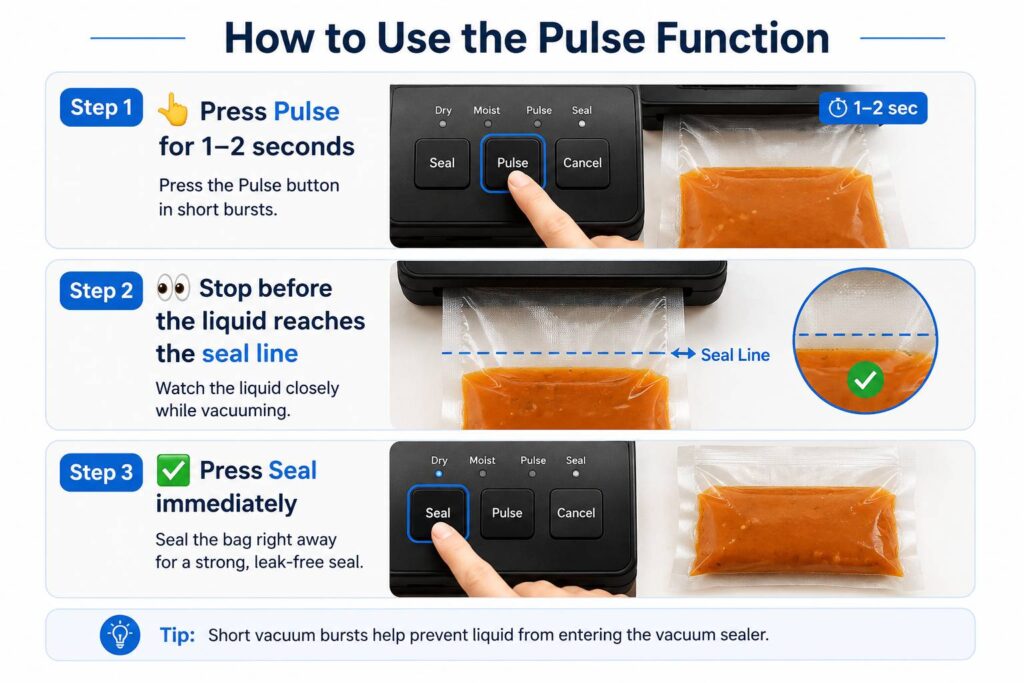
If your vacuum sealer includes a Pulse function, it gives you more control over the vacuum process. Instead of continuously removing air, you can vacuum in short bursts and stop before the liquid reaches the sealing bar.
This method works well for soups, sauces, marinades, and other moist foods. Watch the liquid closely during sealing. Once it gets close to the top of the bag, stop vacuuming and seal immediately.
In this Can You Vacuum Seal Liquids? (Complete Guide), the Pulse function is one of the easiest ways to reduce spills and create a reliable seal without freezing the liquid first
Use Moist Mode
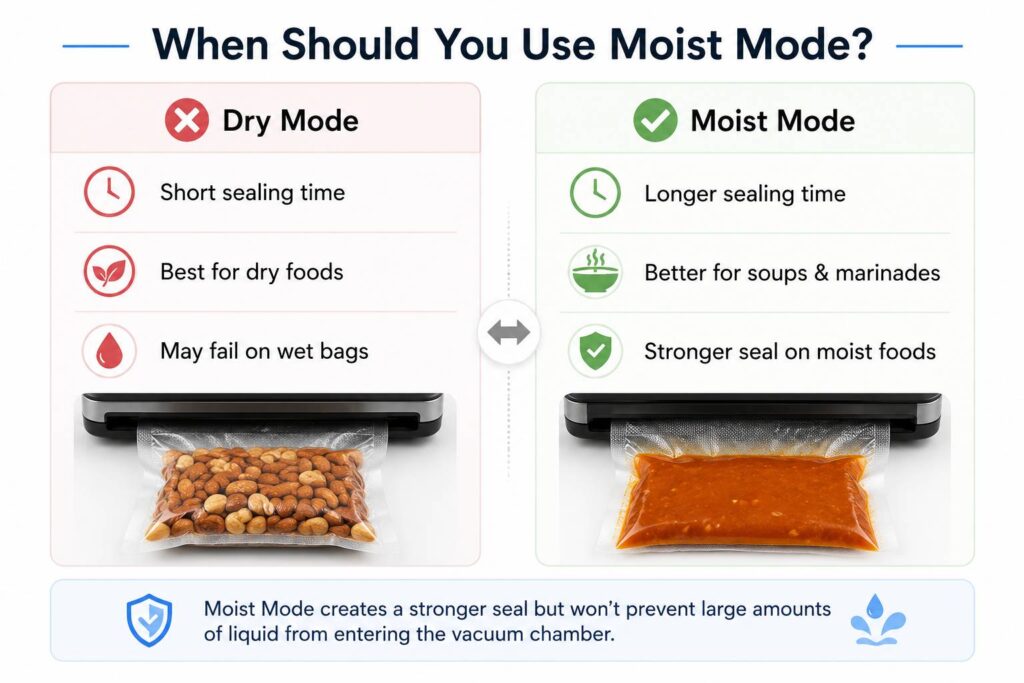
If your vacuum sealer has a Moist setting, use it when sealing soups, sauces, marinades, or other high-moisture foods. This mode extends the sealing time, creating a stronger seal even if a small amount of moisture reaches the sealing area.
While the Moist mode improves sealing performance, it cannot stop large amounts of liquid from being pulled toward the machine. For best results in this Can You Vacuum Seal Liquids? (Complete Guide), combine the Moist mode with freezing the liquid first or using the Pulse function.
The Moist setting is helpful for slightly wet foods, but it is not a complete solution for sealing large amounts of liquid.
Use a Chamber Vacuum Sealer
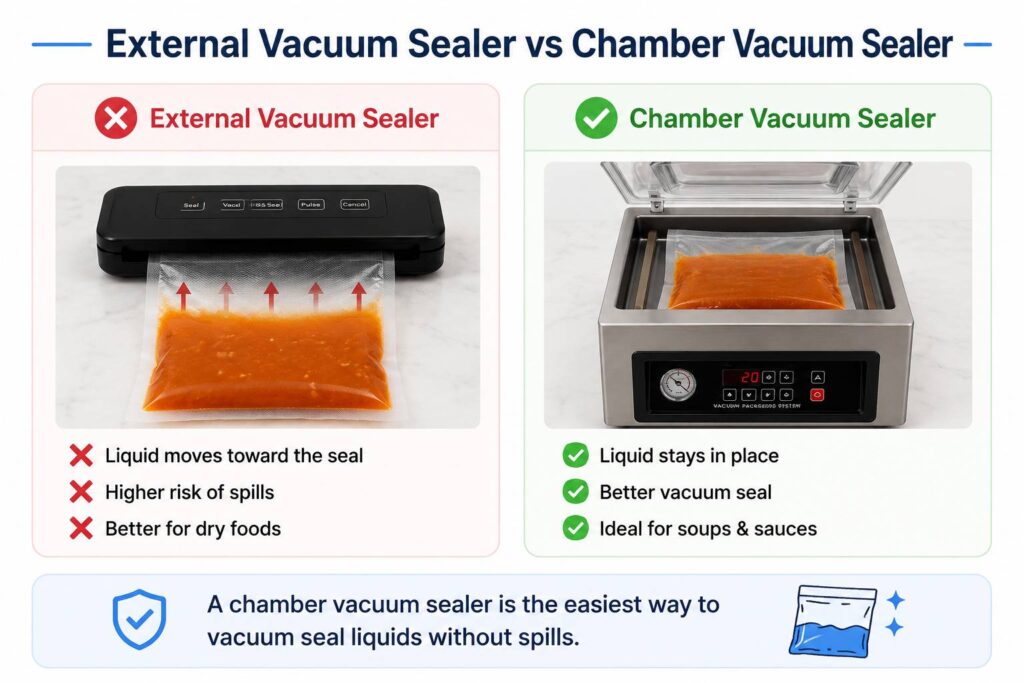
If you have access to a chamber vacuum sealer, it is the easiest and most reliable way to seal liquids. Unlike external vacuum sealers, the entire bag is placed inside the chamber, so liquids stay in place during the vacuum process.
For anyone asking Can You Vacuum Seal Liquids? (Complete Guide), a chamber vacuum sealer is considered the best solution for soups, sauces, marinades, stocks, and other liquid foods.
Best for sealing:
Soups
Sauces
Marinades
Broth
Liquid meal prep
The main drawback is price. Chamber vacuum sealers cost more and take up more counter space than standard vacuum sealers, making them a better choice for frequent users or small businesses.
What Liquids Can You Vacuum Seal?
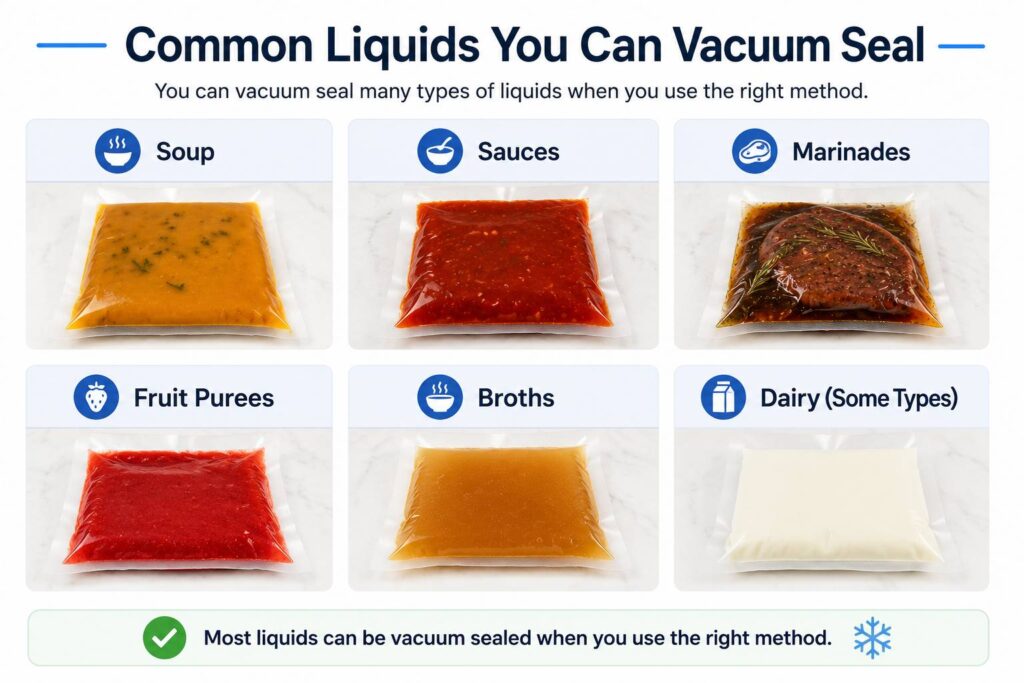
Many people ask Can You Vacuum Seal Liquids? (Complete Guide) because not every liquid behaves the same during vacuum sealing.
Some liquids are easy to seal with the right method, while others require extra care to prevent spills or weak seals. Choosing the correct technique helps keep food fresh and protects your vacuum sealer.
Below are some of the most common liquids you can vacuum seal successfully.
Common Mistakes When Vacuum Sealing Liquids
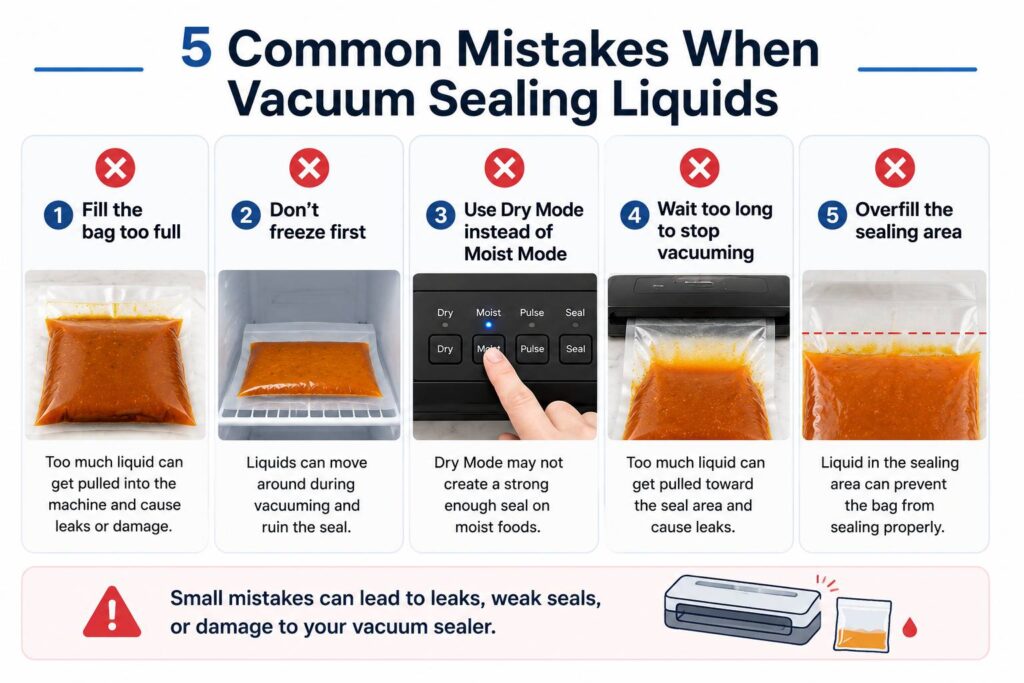
Even after learning Can You Vacuum Seal Liquids? (Complete Guide), many people still run into leaking bags or weak seals.
Most problems happen because the wrong sealing method is used, not because the vacuum sealer is defective. Avoiding a few common mistakes can improve sealing performance, protect your machine, and help food stay fresh longer.
Below are the most common mistakes when vacuum sealing liquids and how to avoid them.
Best Vacuum Sealers for Liquids
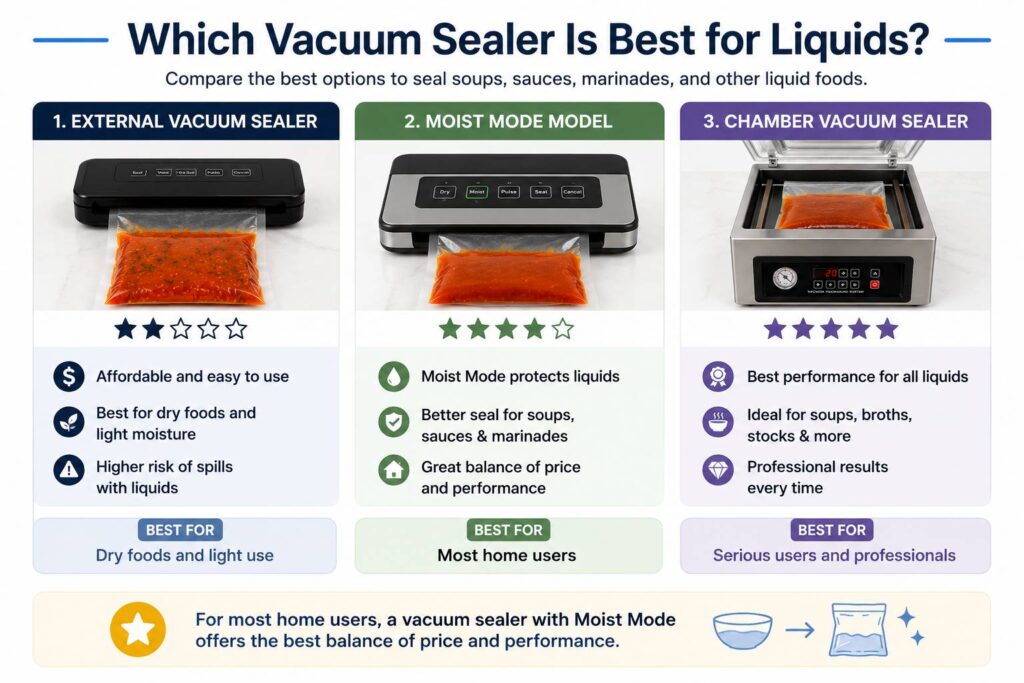
Choosing the best vacuum sealer for liquids depends on how often you seal soups, sauces, marinades, or other wet foods.
Some machines include features like Moist Mode or Pulse Vacuum, while others are designed with a chamber system that handles liquids much more effectively.
If you’re asking Can You Vacuum Seal Liquids? (Complete Guide), the answer is yes—but using the right vacuum sealer makes the process much easier and reduces the risk of leaks or weak seals.
Here are the main types of vacuum sealers recommended for sealing liquids.
Frequently Asked Questions
Below are answers to the most common questions about Can You Vacuum Seal Liquids? (Complete Guide). These quick answers will help you vacuum seal soups, sauces, marinades, and other liquids safely and effectively.
Can You Vacuum Seal Liquids Without Freezing Them?
Yes, but it requires the right technique. You can use Pulse Mode, Moist Mode, or a chamber vacuum sealer to reduce the risk of liquids being pulled into the machine.
Can You Vacuum Seal Soup?
Yes. Freezing the soup first is the easiest method for most home vacuum sealers. A chamber vacuum sealer can also seal liquid soup without freezing.
What Liquids Should Not Be Vacuum Sealed?
Very hot liquids should not be vacuum sealed immediately. Let them cool first to avoid steam, excess moisture, and poor sealing results.
Is Moist Mode Better Than Dry Mode?
Yes, Moist Mode is recommended for foods with high moisture, such as soups, sauces, marinades, and cooked meats. It creates a stronger seal than Dry Mode.
What Is the Best Vacuum Sealer for Liquids?
For most home users, a vacuum sealer with Moist Mode and Pulse Function offers the best balance of convenience and performance. If you seal liquids frequently, a chamber vacuum sealer provides the best results.
Can Vacuum Sealing Liquids Damage the Machine?
Yes. If liquid reaches the sealing bar or vacuum pump, it may cause weak seals or damage the machine. Following the methods explained in Can You Vacuum Seal Liquids? (Complete Guide) helps prevent these problems.
Final Verdict
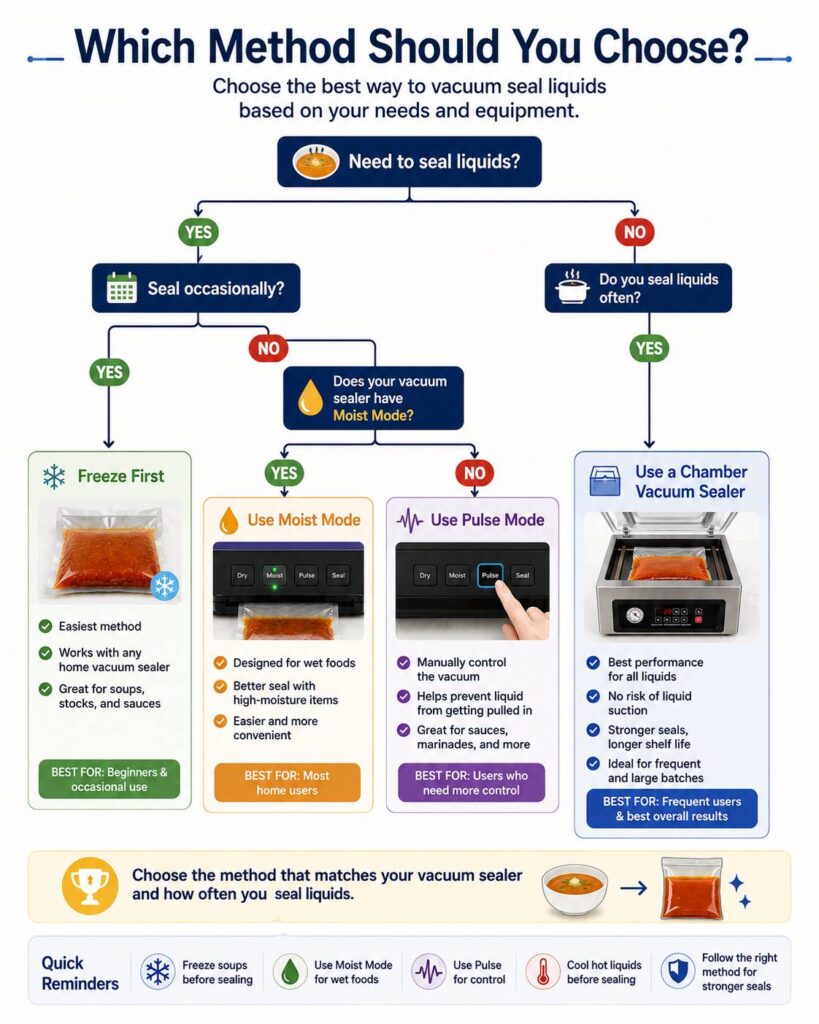
So, Can You Vacuum Seal Liquids? (Complete Guide)? Yes—you can, as long as you use the right method.
For most home users, freezing liquids before sealing is the easiest and most reliable option. If your vacuum sealer has Moist Mode or Pulse Function, you can also seal many liquids without freezing by controlling the vacuum process carefully.
If you regularly vacuum seal soups, sauces, marinades, or other liquid foods, a chamber vacuum sealer delivers the best results because it prevents liquids from being pulled toward the sealing bar.
Choosing the right vacuum sealer is just as important as using the correct technique. If you’re still comparing models, check out our detailed vacuum sealer reviews and buying guides to find the best option for your kitchen.
Final Thoughts
We hope this Can You Vacuum Seal Liquids? (Complete Guide) has helped you understand the safest and easiest ways to vacuum seal soups, sauces, marinades, and other liquids.
For most home users, freezing liquids first or using Moist Mode provides the best balance of convenience and reliable sealing. If you vacuum seal liquids frequently, investing in the right vacuum sealer can make the process much easier.
If you’re still deciding which machine to buy, we’ve also compared some of the most popular vacuum sealers to help you choose the best one for your needs.
Check FoodSaver vs Nesco VS-12 Comparison
Compare features, sealing performance, durability, and value before you buy.
Not sure which vacuum sealer is right for you?
Read our Best Vacuum Sealers for Home Use guide to compare the best models for every budget and kitchen.
Looking for the best vacuum sealer bags?
Compare the best vacuum sealer bags for liquids, meats, sous vide cooking, and freezer storage in our complete buying guide.