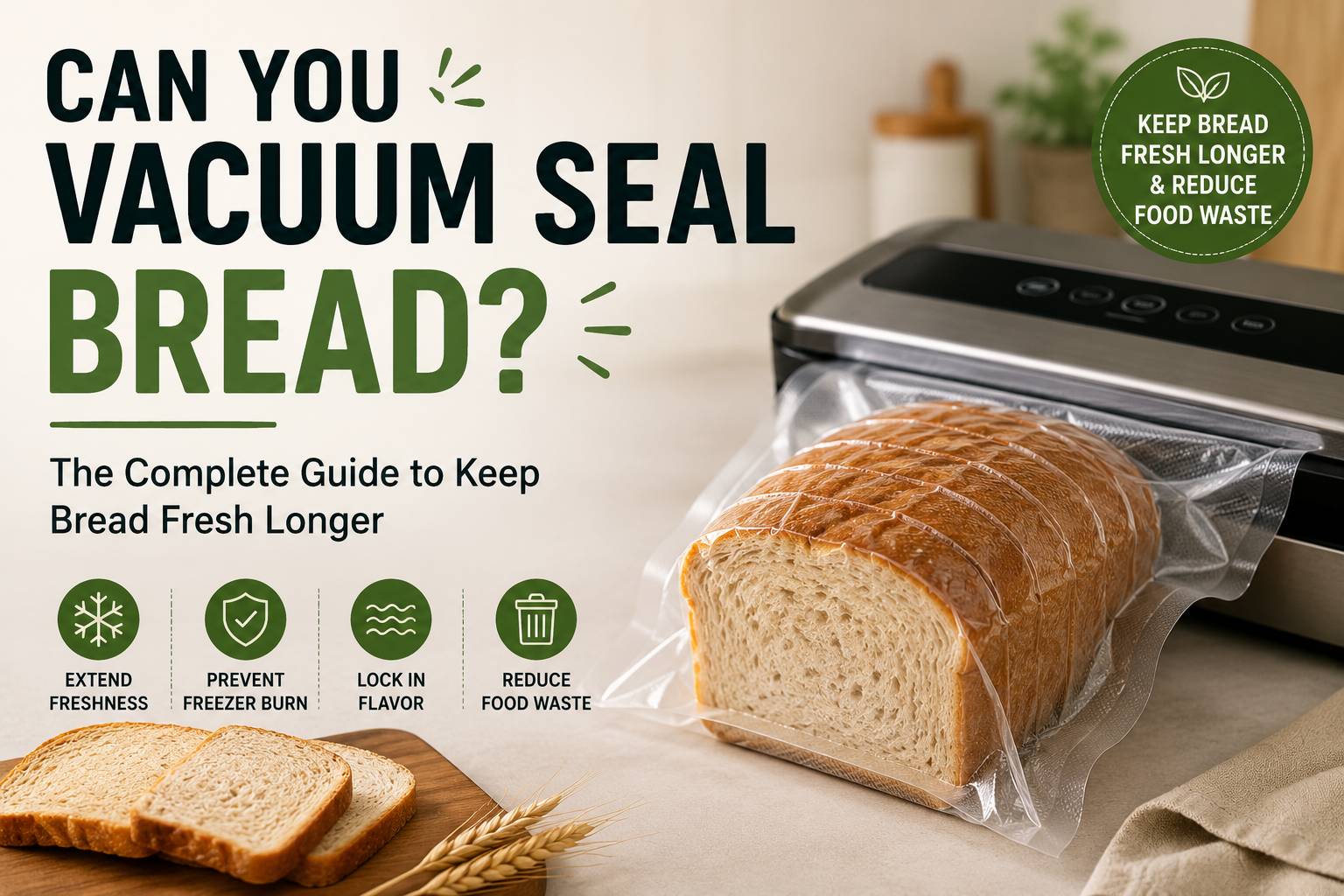
Wondering Can You Vacuum Seal Bread? The answer is yes. Vacuum sealing is a simple way to keep bread fresh longer, reduce food waste, and protect it from freezer burn. In this guide, you’ll learn which types of bread can be vacuum sealed, the best way to seal soft bread without crushing it, how long vacuum-sealed bread lasts, common mistakes to avoid, and how to choose the right vacuum sealer bags for the best results.
Table of Contents
Quick Answer
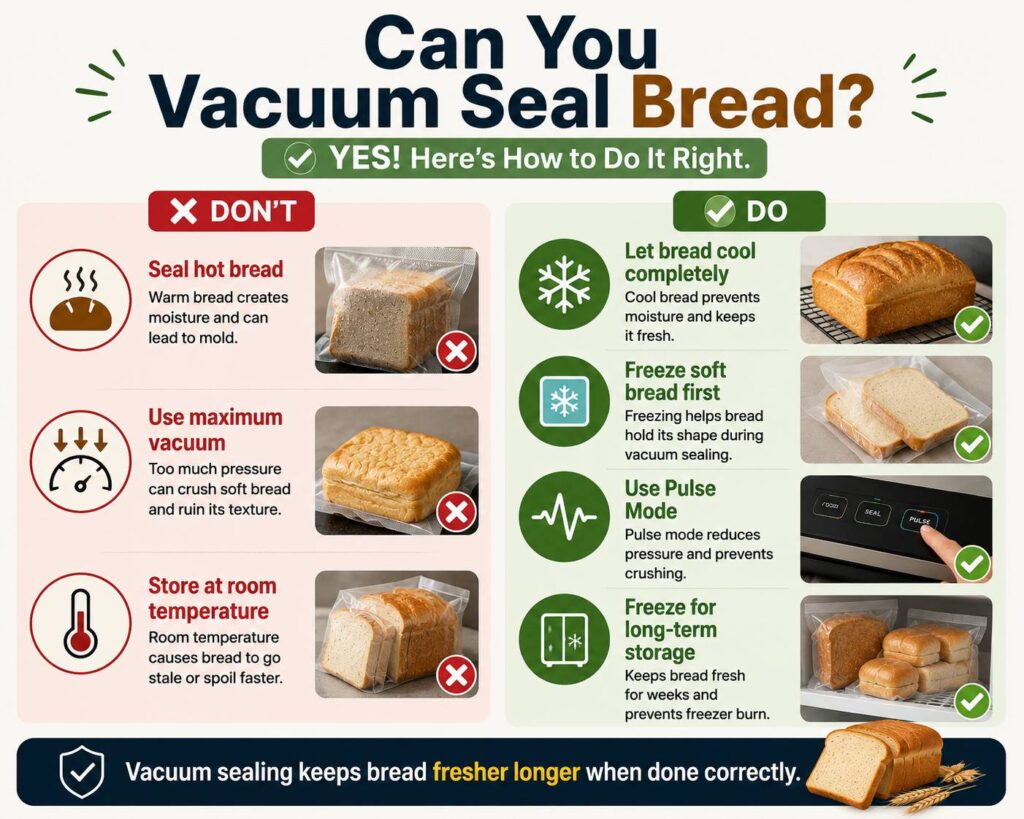
Can You Vacuum Seal Bread? Yes, you can vacuum seal bread. Vacuum sealing helps keep bread fresh longer, protects it from freezer burn, and reduces food waste. However, soft bread can easily be crushed if too much vacuum pressure is applied.
For the best results, let the bread cool completely before sealing. If you’re sealing soft sandwich bread, rolls, or pastries, freezing them first or using the Pulse function can help maintain their shape. With the right method, Can You Vacuum Seal Bread is an easy way to extend freshness while preserving texture and flavor.
Why Vacuum Seal Bread?
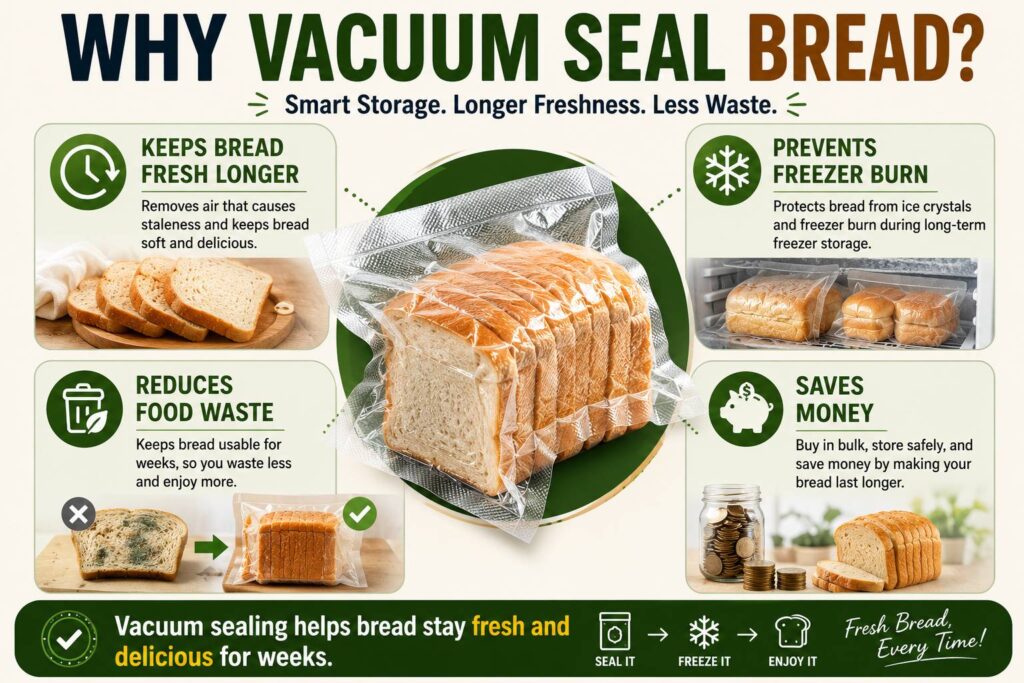
If you’re wondering Can You Vacuum Seal Bread, the biggest benefit is extending freshness while protecting the bread from air and moisture. Vacuum sealing helps reduce waste and keeps bread ready to enjoy whenever you need it.
Here are the main benefits of vacuum sealing bread:
- Keeps bread fresh longer by reducing air exposure.
- Prevents freezer burn during long-term freezer storage.
- Reduces food waste by extending shelf life.
- Saves money by allowing you to buy bread in bulk and store it safely.
Although vacuum sealing helps preserve freshness, it’s best to freeze bread for long-term storage. Refrigerating vacuum-sealed bread may cause it to become stale more quickly.
Using the right technique makes Can You Vacuum Seal Bread an easy and effective way to store homemade or store-bought bread.
Which Types of Bread Can You Vacuum Seal?
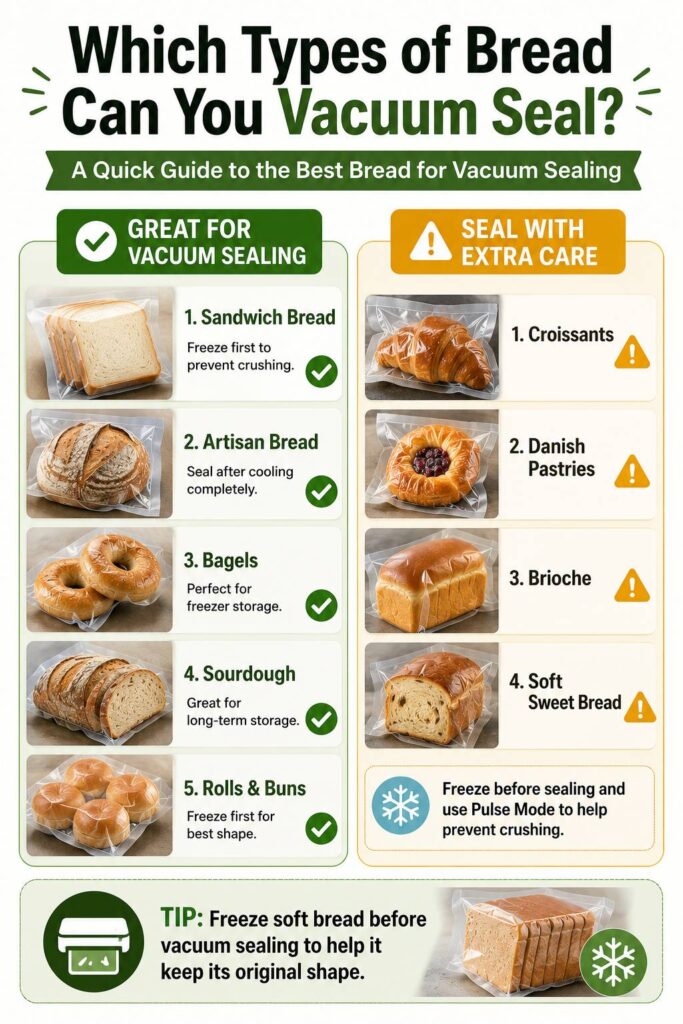
If you’re wondering Can You Vacuum Seal Bread, the good news is that most types of bread can be vacuum sealed. However, some breads require extra care because they are softer and can be crushed during the sealing process.
Bread Type| Can You Vacuum Seal It?| Best Tip
Sandwich Bread| ✅ Yes| Freeze first to prevent crushing.
Artisan Bread| ✅ Yes| Seal after the bread has completely cooled.
Bagels| ✅ Yes| Great for freezer storage.
Rolls & Buns| ✅ Yes| Freeze first for the best shape.
Sourdough Bread| ✅ Yes| Slice before sealing if storing long term.
Croissants & Pastries| ⚠️ Yes, with care| Freeze first and use Pulse Mode to avoid crushing.
In general, Can You Vacuum Seal Bread successfully? Yes. Firmer breads are the easiest to vacuum seal, while soft breads and pastries should be frozen before sealing to help maintain their shape and texture.
How to Vacuum Seal Bread
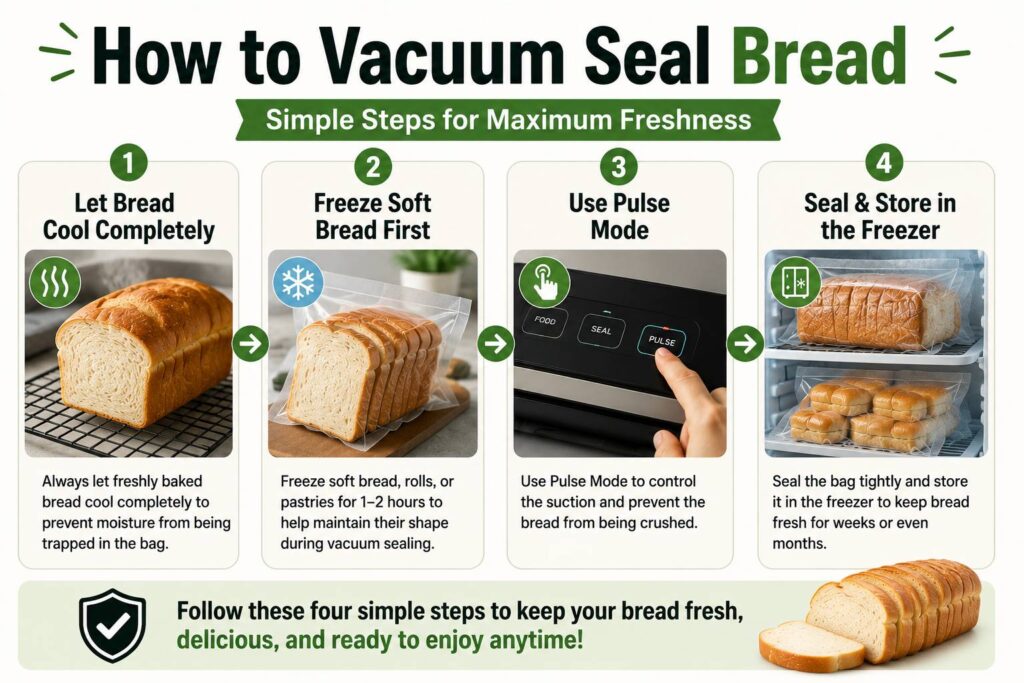
If you’re wondering Can You Vacuum Seal Bread, the process is simple when you follow the right steps. The key is to protect the bread from being crushed while creating a strong airtight seal.
Before vacuum sealing, make sure the bread has cooled completely. For soft breads such as sandwich bread, rolls, or pastries, freezing them first can help maintain their shape during the vacuum process.
Next, choose the appropriate sealing mode. If your vacuum sealer includes a Pulse function, use it to control the vacuum pressure and stop before the bread becomes compressed. Once enough air has been removed, seal the bag immediately.
By following these simple techniques, Can You Vacuum Seal Bread successfully without sacrificing its texture, freshness, or appearance.How to Vacuum Seal Bread
If you’re wondering Can You Vacuum Seal Bread, the process is simple when you follow the right steps. The key is to protect the bread from being crushed while creating a strong airtight seal.
Before vacuum sealing, make sure the bread has cooled completely. For soft breads such as sandwich bread, rolls, or pastries, freezing them first can help maintain their shape during the vacuum process.
Next, choose the appropriate sealing mode. If your vacuum sealer includes a Pulse function, use it to control the vacuum pressure and stop before the bread becomes compressed. Once enough air has been removed, seal the bag immediately.
By following these simple techniques, Can You Vacuum Seal Bread successfully without sacrificing its texture, freshness, or appearance.
Let the Bread Cool Completely
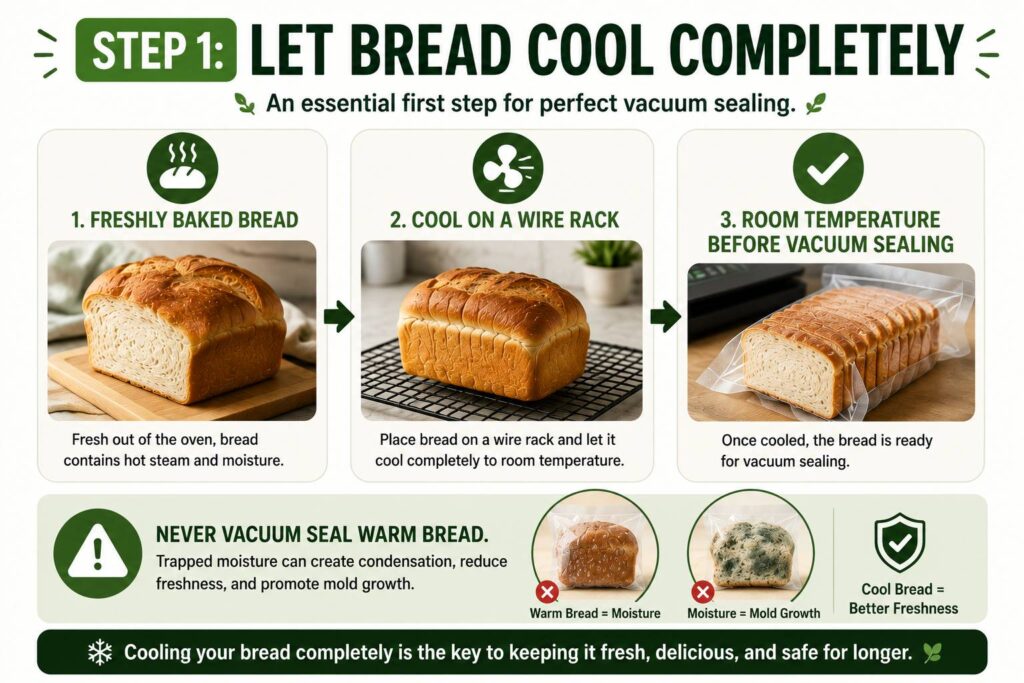
Before you vacuum seal bread, always let it cool completely. Sealing warm bread traps steam inside the bag, creating excess moisture that can reduce freshness and increase the risk of mold.
Place freshly baked bread on a cooling rack until it reaches room temperature. This allows moisture to escape naturally and helps create a stronger airtight seal.
If you’re wondering Can You Vacuum Seal Bread, cooling the bread first is one of the simplest ways to preserve its texture and flavor while extending its storage life.
Freeze Soft Bread First
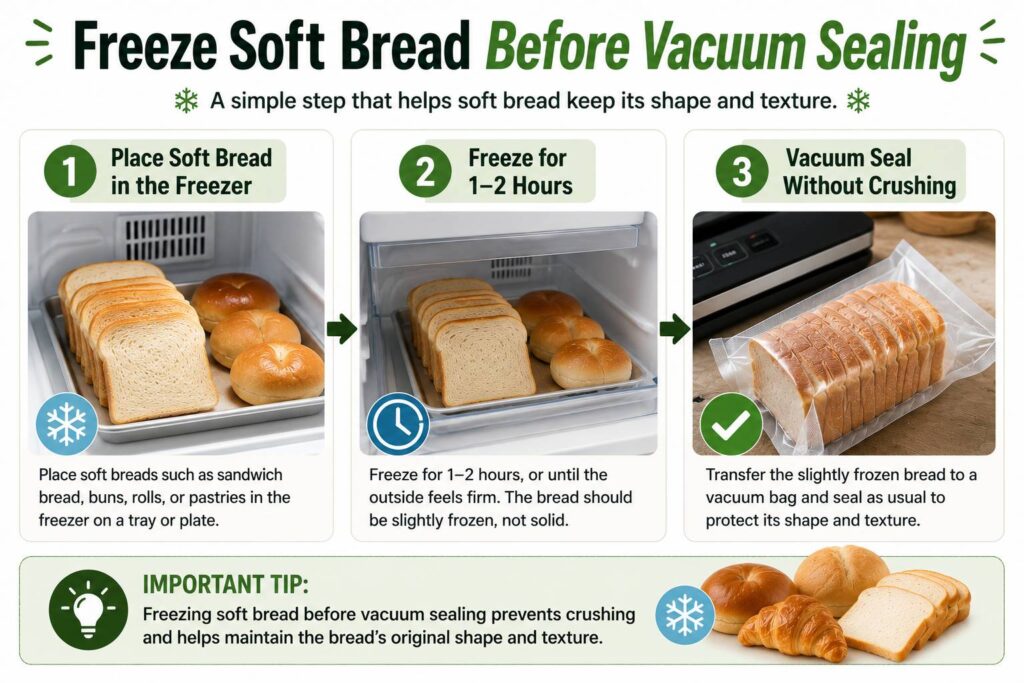
If you’re wondering Can You Vacuum Seal Bread without crushing it, freezing soft bread first is one of the best methods. Soft breads such as sandwich bread, hamburger buns, dinner rolls, and pastries can easily lose their shape during vacuum sealing.
Place the bread in the freezer for 1–2 hours, or until the outside feels firm. Once slightly frozen, transfer it to a vacuum bag and seal as usual. This helps the bread keep its shape while still creating a strong airtight seal.
Freezing soft bread before vacuum sealing is a simple step that protects its texture and makes Can You Vacuum Seal Bread much more successful, especially for delicate baked goods.
Use Pulse Mode to Prevent Crushing
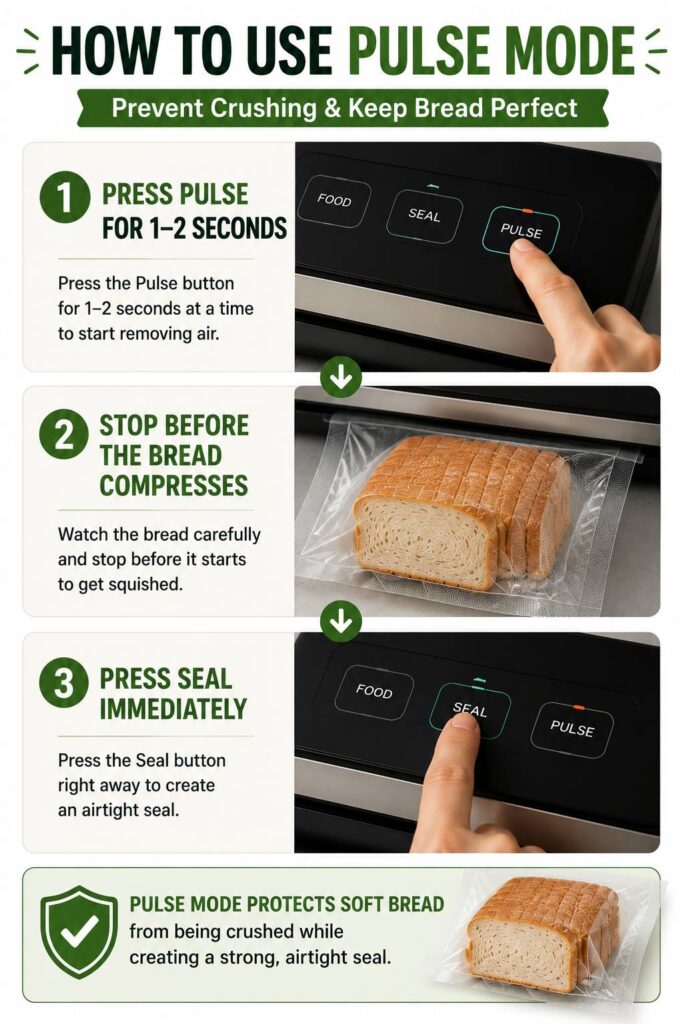
If you’re wondering Can You Vacuum Seal Bread without flattening it, the Pulse Mode is one of the most useful features on a vacuum sealer. Instead of continuously removing air, Pulse Mode lets you control the suction manually.
Press the Pulse button for one or two seconds at a time and watch the bread carefully. Stop removing air before the loaf begins to compress, then press the Seal button immediately to create an airtight seal.
This method works especially well for sandwich bread, hamburger buns, and other soft baked goods. Using Pulse Mode helps preserve the bread’s shape while still providing the benefits of vacuum sealing.
For delicate loaves, using Pulse Mode is one of the easiest ways to make Can You Vacuum Seal Bread successfully without damaging the bread.
Store in the Freezer for Long-Term Freshness
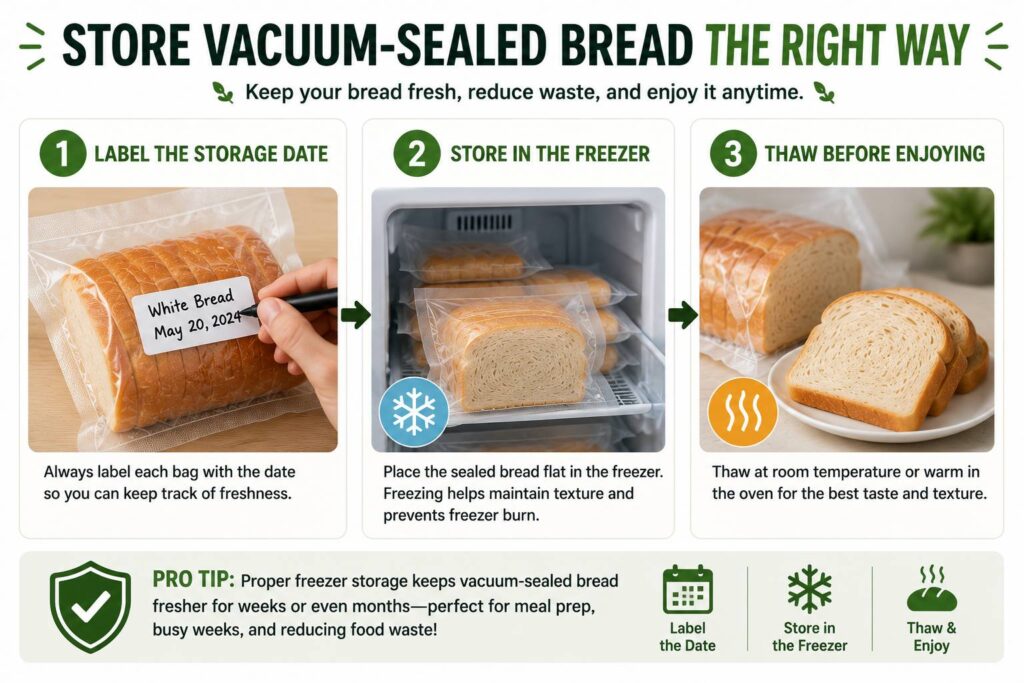
Once you’ve finished vacuum sealing, the best place to store bread is in the freezer. While Can You Vacuum Seal Bread for refrigerator storage, freezing provides much better long-term freshness and helps maintain the bread’s texture.
Label each vacuum-sealed bag with the storage date before placing it in the freezer. When you’re ready to eat the bread, simply thaw it at room temperature or warm it in the oven for the best taste and texture.
Proper freezer storage helps reduce freezer burn and keeps bread fresh for weeks or even months. By storing vacuum-sealed bread correctly, Can You Vacuum Seal Bread becomes one of the easiest ways to reduce food waste and always have fresh bread available.
How Long Does Vacuum-Sealed Bread Last?
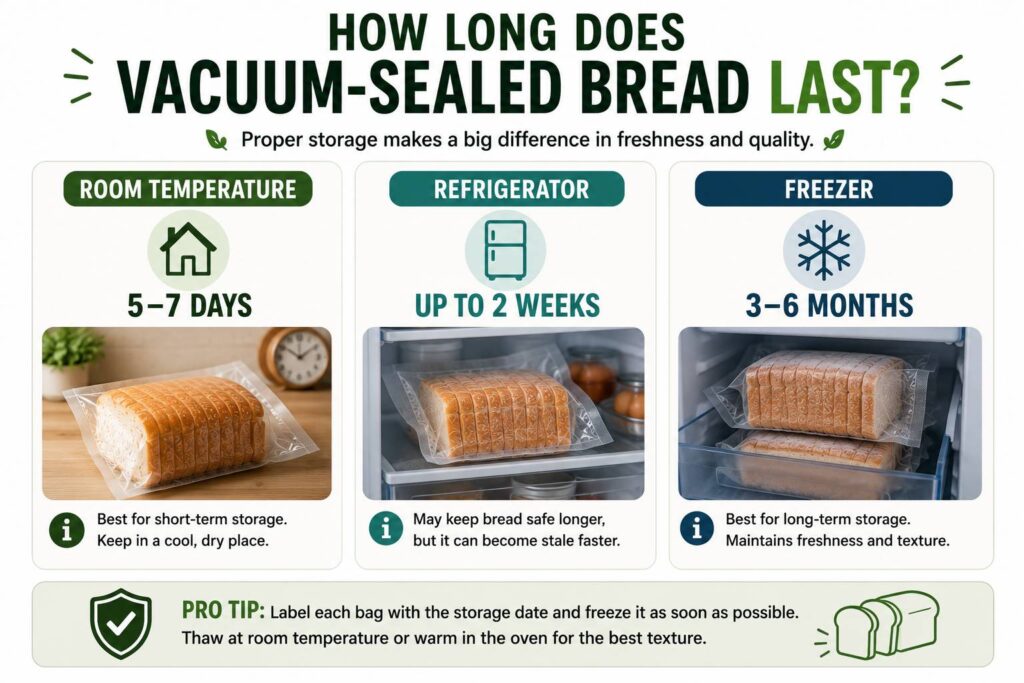
If you’re wondering Can You Vacuum Seal Bread, vacuum sealing can significantly extend its freshness, especially when combined with freezer storage. However, the storage time depends on where the bread is kept.
Storage Method| Vacuum-Sealed Bread
Room Temperature| 5–7 days
Refrigerator| Up to 2 weeks*
Freezer| 3–6 months
«*Refrigeration may keep bread safe longer, but it can also make the bread become stale more quickly. Freezer storage is the best option for preserving both freshness and texture.»
For the best results, label each vacuum-sealed bag with the storage date and freeze it as soon as possible. When you’re ready to eat the bread, thaw it at room temperature or warm it in the oven for the best texture.
Using proper storage methods makes Can You Vacuum Seal Bread an excellent way to reduce food waste and enjoy fresh bread whenever you need it.
Common Mistakes When Vacuum Sealing Bread
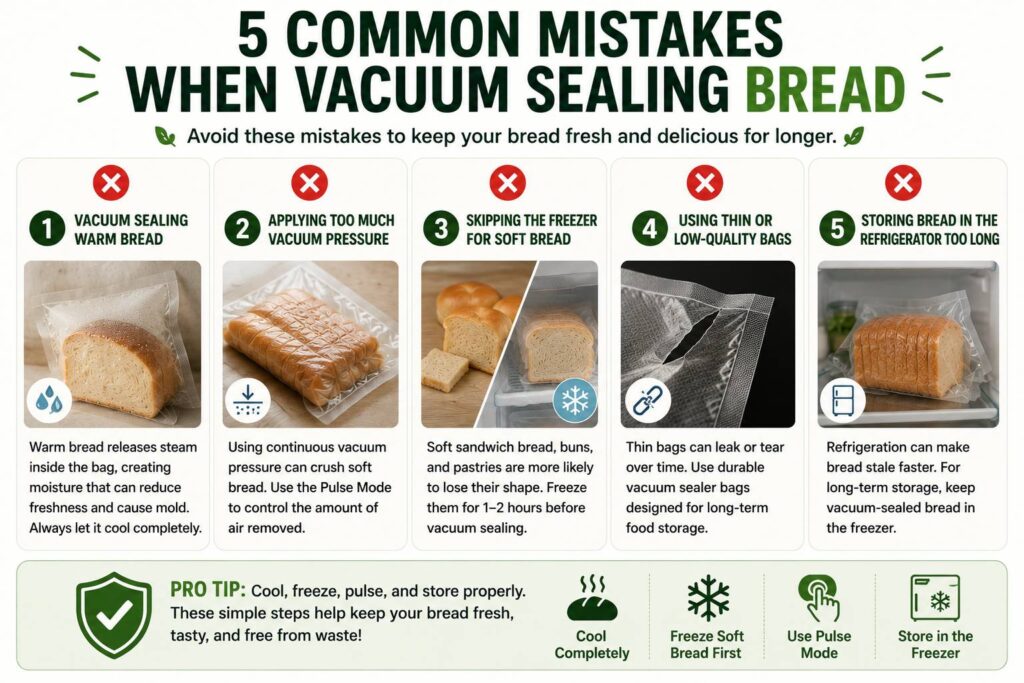
If you’re wondering Can You Vacuum Seal Bread successfully, avoiding a few common mistakes can make a big difference. These simple tips help protect the bread’s texture and extend its freshness.
❌ Vacuum Sealing Warm Bread
Warm bread releases steam inside the bag, creating moisture that can reduce freshness and increase the risk of mold. Always let bread cool completely before sealing.
❌ Applying Too Much Vacuum Pressure
Using continuous vacuum pressure can crush soft bread. Use the Pulse Mode whenever possible to control the amount of air removed.
❌ Skipping the Freezer for Soft Bread
Soft sandwich bread, buns, and pastries are more likely to lose their shape. Freeze them for 1–2 hours before vacuum sealing.
❌ Using Thin or Low-Quality Bags
Thin bags can leak or tear over time. Use durable vacuum sealer bags designed for long-term food storage.
❌ Storing Bread in the Refrigerator Too Long
Although vacuum sealing helps reduce air exposure, refrigeration can make bread stale faster. For long-term storage, keep vacuum-sealed bread in the freezer.
By avoiding these mistakes, Can You Vacuum Seal Bread becomes an easy and reliable way to keep bread fresh while reducing food waste.
Best Vacuum Sealer Bags for Bread
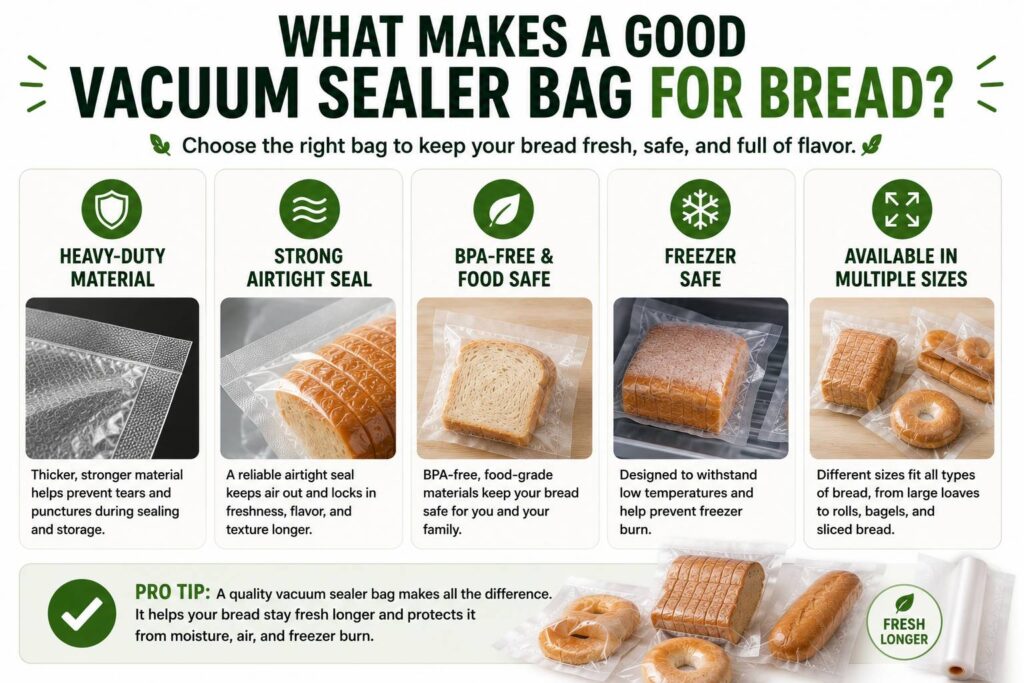
If you’re wondering Can You Vacuum Seal Bread, choosing the right vacuum sealer bag is just as important as using the correct sealing technique. A high-quality bag helps create a stronger airtight seal while protecting bread from moisture and freezer burn.
When choosing vacuum sealer bags for bread, look for these features:
- Heavy-duty material for better durability.
- Strong airtight seal to keep bread fresh longer.
- BPA-free food-safe plastic for safe food storage.
- Freezer-safe construction to reduce freezer burn.
- Multiple bag sizes for loaves, buns, and rolls.
The best bag depends on the type of bread you’re storing. Larger bags work well for whole loaves, while smaller bags are ideal for rolls, bagels, and sliced bread.
If you’re looking for the best options, read our complete guide to Best Vacuum Sealer Bags, where we compare the top vacuum sealer bags for durability, value, and long-term food storage.
Not sure which vacuum sealer bag to buy? Read our complete guide to Best Vacuum Sealer Bags to compare the top options for every type of food.
Frequently Asked Questions
Can You Vacuum Seal Bread Without Crushing It?
Yes. If you’re wondering Can You Vacuum Seal Bread without flattening it, use the Pulse Mode or freeze soft bread for 1–2 hours before vacuum sealing. These methods help maintain the bread’s shape.
Does Vacuum Sealing Keep Bread Fresh Longer?
Yes. Vacuum sealing reduces air exposure, which helps preserve freshness. For the best results, store vacuum-sealed bread in the freezer.
Can You Vacuum Seal Homemade Bread?
Absolutely. Let homemade bread cool completely before vacuum sealing to prevent moisture from becoming trapped inside the bag.
Is It Better to Freeze Bread Before Vacuum Sealing?
For soft breads such as sandwich bread, buns, and pastries, yes. Freezing first helps prevent the bread from being crushed during vacuum sealing.
Can You Freeze Vacuum-Sealed Bread?
Yes. Freezing is the best way to store vacuum-sealed bread for long-term freshness. Properly stored bread can maintain good quality for several months.
Final Verdict
So, Can You Vacuum Seal Bread? Absolutely.
Vacuum sealing is an effective way to keep bread fresh longer, reduce food waste, and protect it from freezer burn. The best results come from letting the bread cool completely, freezing soft bread before sealing, using Pulse Mode to prevent crushing, and storing the sealed bread in the freezer.
If you follow these simple steps, Can You Vacuum Seal Bread becomes an easy and reliable method for preserving both homemade and store-bought bread.
Want to learn more about vacuum sealing? These guides can help you choose the right equipment and improve your food storage:
- Best Vacuum Sealers for Home Use – Compare the best vacuum sealers for everyday food storage.
- Best Vacuum Sealer Bags – Find the best vacuum sealer bags for bread, cheese, meat, and more.
- Can You Vacuum Seal Cheese? – Learn the best way to store different types of cheese.
- Can You Vacuum Seal Liquids? – Discover safe methods for vacuum sealing soups, sauces, and marinades.