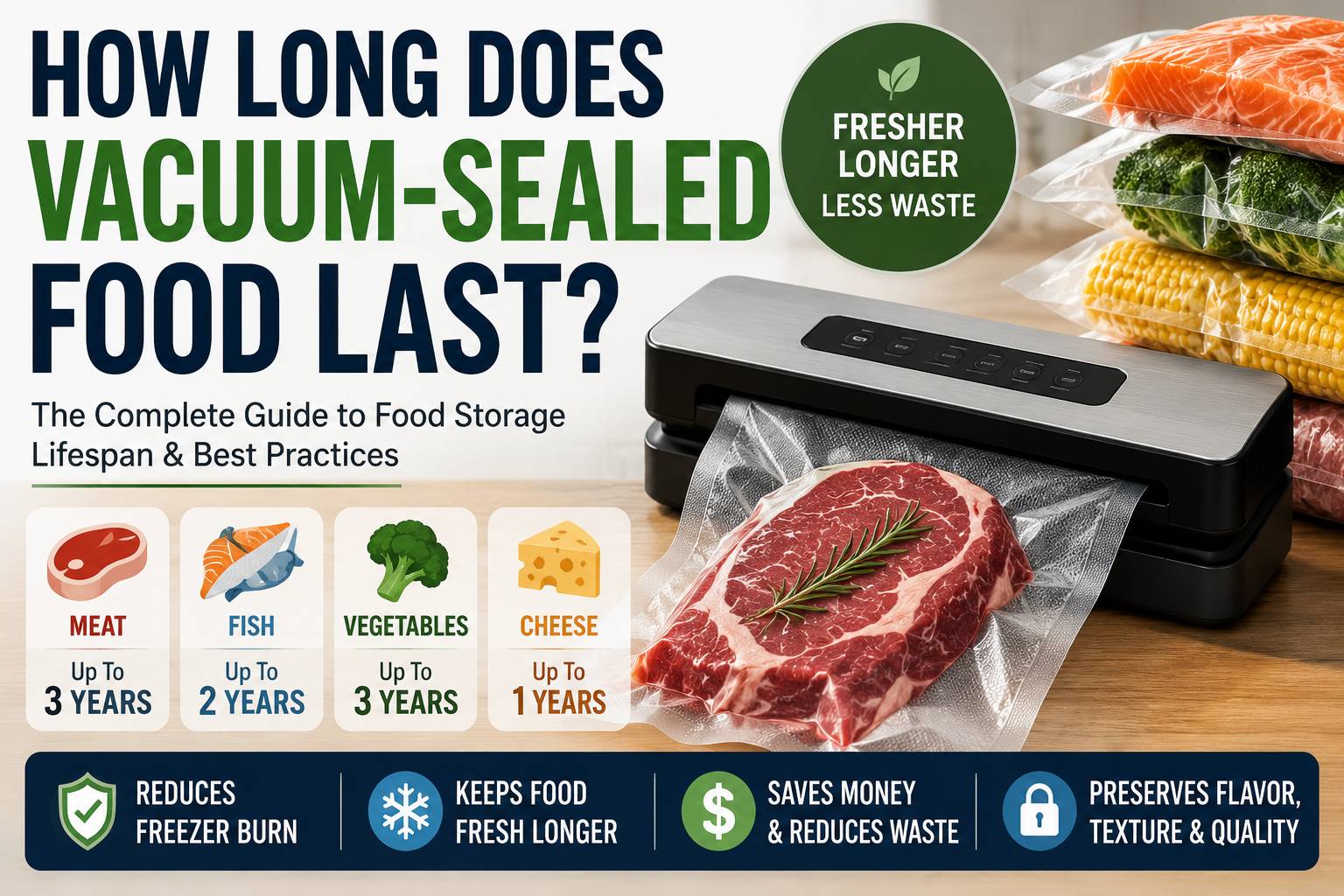
If you’ve ever wondered, “How Long Does Vacuum-Sealed Food Last?”, the answer depends on the type of food and how it’s stored. In general, vacuum sealing can significantly extend the shelf life of meat, fish, vegetables, cheese, and other foods by reducing exposure to oxygen and moisture. In this guide, you’ll learn how long vacuum-sealed food lasts, which foods benefit the most, common mistakes to avoid, and the best storage practices for maximizing freshness.
Table of Contents
Quick Answer
If you’re wondering how long does vacuum-sealed food last, the short answer is that most vacuum-sealed foods can last 2–5 times longer than foods stored in regular containers or freezer bags. The exact shelf life depends on the type of food, storage temperature, and seal quality.
In general, vacuum-sealed meat can last up to 2–3 years in the freezer, while vegetables, fish, and cheese also benefit from significantly extended storage times. Proper vacuum sealing helps reduce air exposure, freezer burn, and food waste.
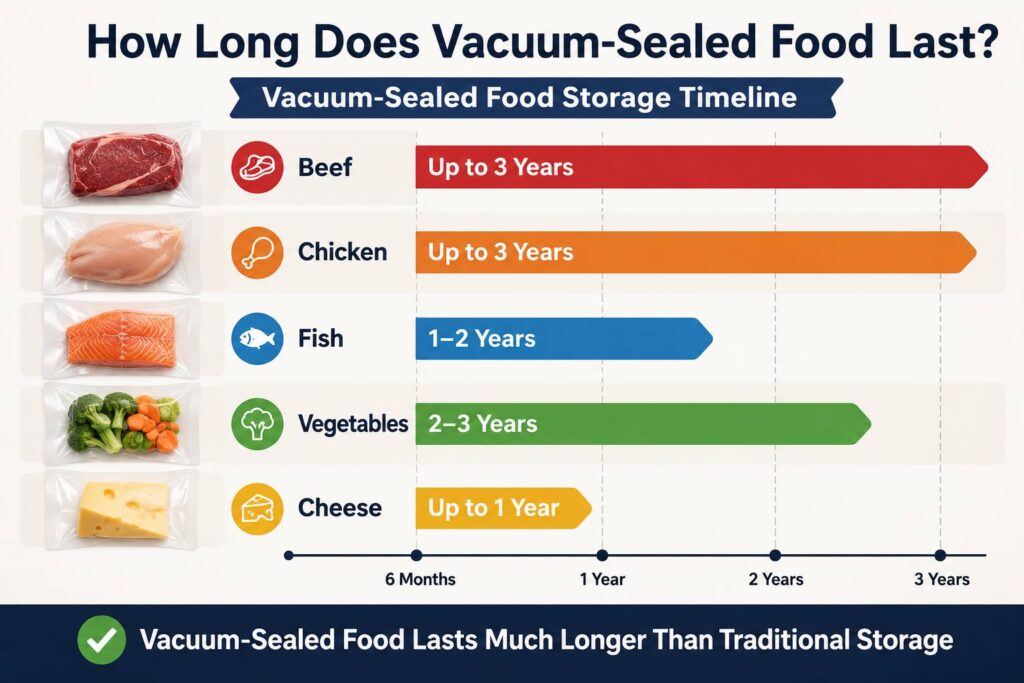
Vacuum-Sealed Food Storage Chart
If you’re researching how long does vacuum-sealed food last, the chart below provides a quick reference for common foods. While actual storage life depends on temperature and seal quality, vacuum sealing can significantly extend freshness compared to traditional storage methods.
Food Type| Refrigerator| Freezer
Beef| 6–10 Days| Up to 3 Years
Chicken| 6–9 Days| Up to 3 Years
Fish| 4–7 Days| 1–2 Years
Vegetables| 1–2 Weeks| 2–3 Years
Cheese| 4–8 Months| Up to 1 Year
Cooked Meals| 1–2 Weeks| 1–2 Years
These estimates assume proper vacuum sealing and consistent storage temperatures. Foods stored in a vacuum-sealed bag generally last much longer because oxygen exposure is greatly reduced.
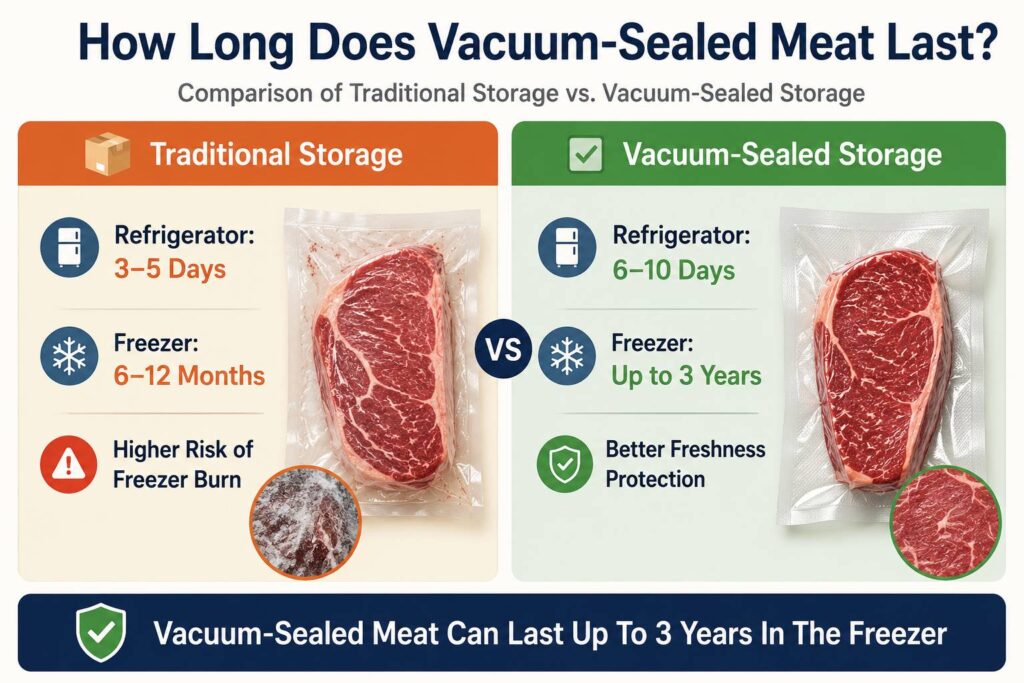
How Long Does Vacuum-Sealed Meat Last?
One of the biggest benefits of vacuum sealing is extending the shelf life of meat. If you’re wondering how long does vacuum-sealed food last, meat is one of the foods that benefits the most.
In the refrigerator, vacuum-sealed meat can typically last 6–10 days, compared to only a few days with traditional packaging.
For freezer storage, properly vacuum-sealed beef, pork, and chicken can last up to 2–3 years while maintaining better quality and reducing freezer burn.
Keep in mind that storage temperature, seal quality, and food freshness before sealing all affect the final shelf life. For best results, always freeze meat as soon as possible after vacuum sealing.
How Long Does Vacuum-Sealed Fish Last?
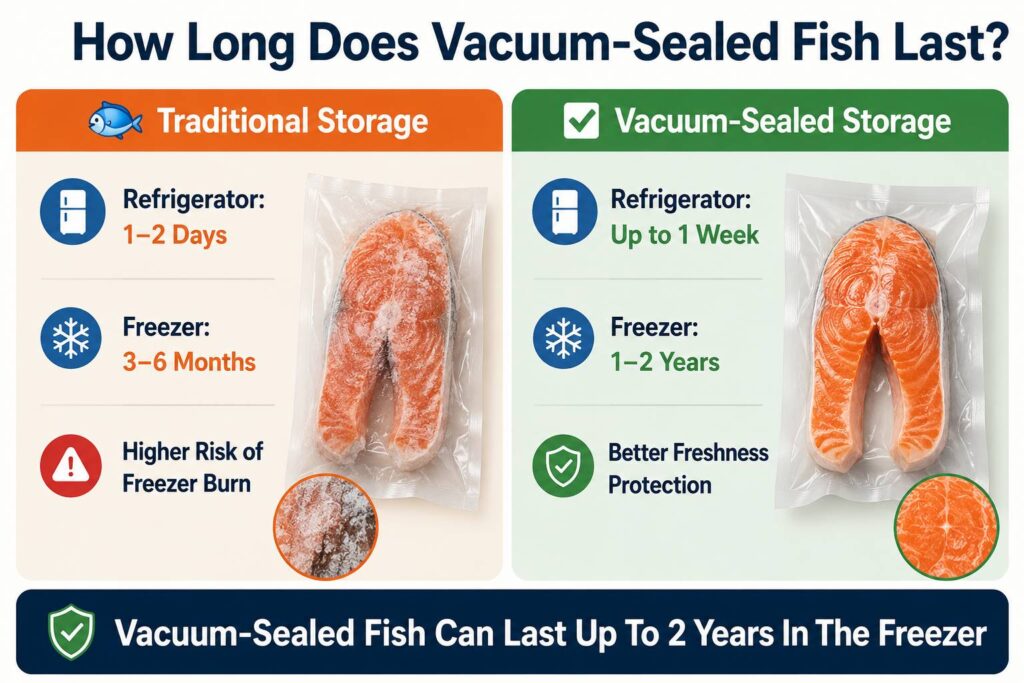
Vacuum-sealed fish can last significantly longer than fish stored in traditional packaging. In the refrigerator, vacuum-sealed fish typically stays fresh for up to 1 week when kept at proper temperatures. In the freezer, it can last 1–2 years while maintaining better quality and reducing the risk of freezer burn. If you’re researching how long does vacuum-sealed food last, fish is one of the foods that benefits most from vacuum sealing because it is highly sensitive to air exposure and moisture loss.
How Long Do Vacuum-Sealed Vegetables Last?
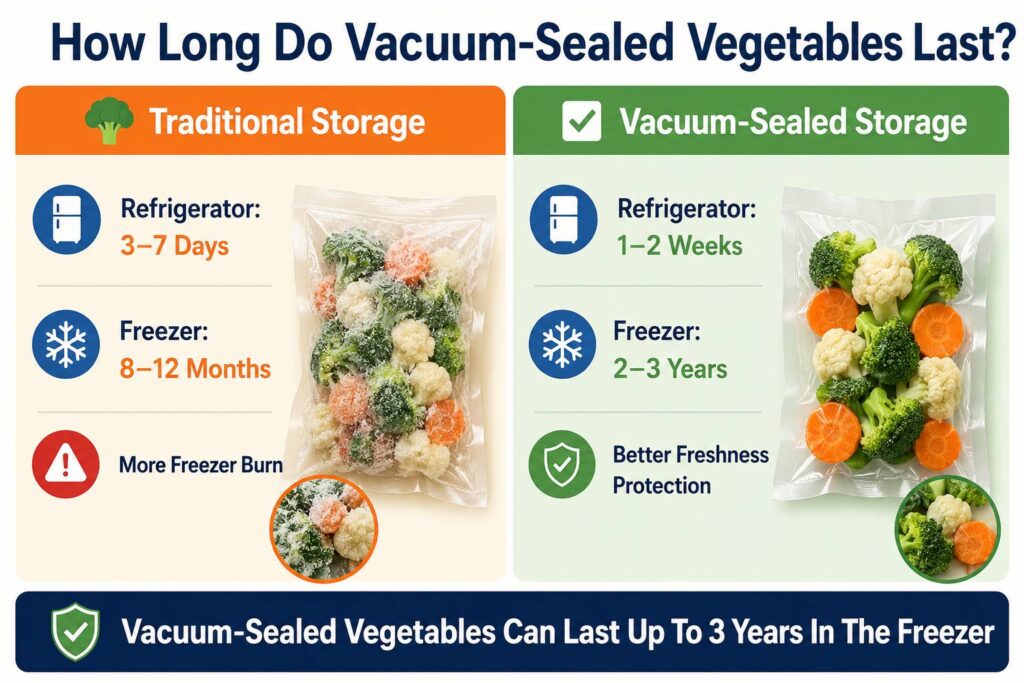
Vacuum-sealed vegetables can last significantly longer than vegetables stored in regular freezer bags or containers. In the refrigerator, most vacuum-sealed vegetables stay fresh for 1–2 weeks, depending on the type. When frozen, many vegetables can maintain good quality for 2–3 years with proper vacuum sealing.
If you’re researching how long does vacuum-sealed food last, vegetables are among the best foods to vacuum seal because removing air helps reduce freezer burn, moisture loss, and nutrient degradation. For the best results, blanch vegetables before vacuum sealing and freezing.
Common Mistakes That Shorten Food Life
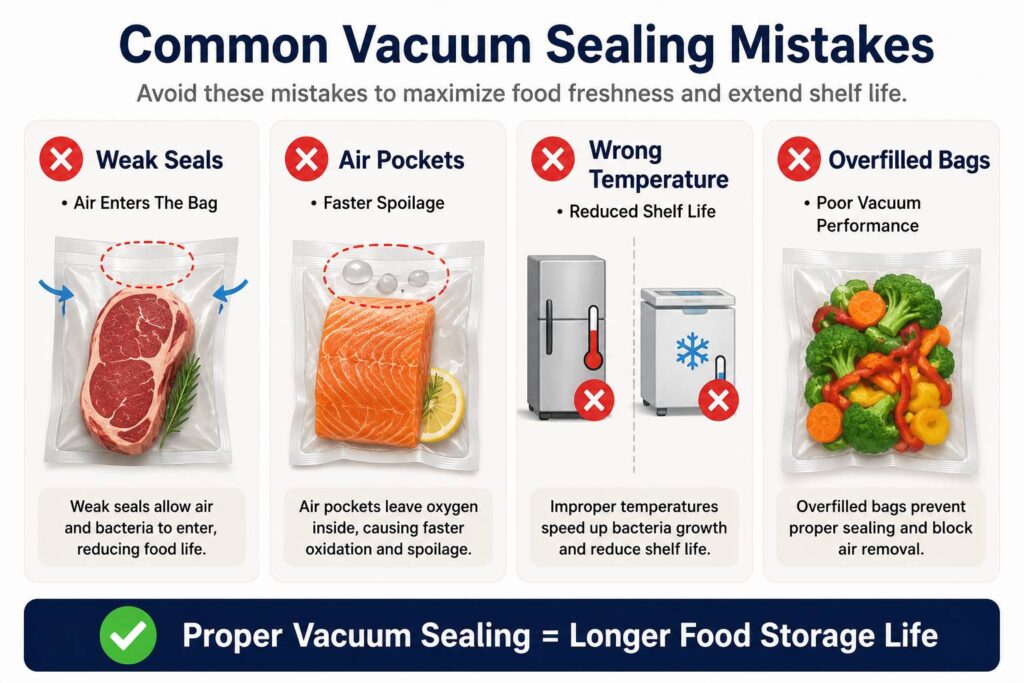
Even though vacuum sealing can dramatically extend food storage times, several common mistakes can reduce its effectiveness. If you’re wondering how long does vacuum-sealed food last, avoiding these errors is just as important as using a vacuum sealer.
The most common mistakes include using weak seals, leaving air pockets inside the bag, storing food at incorrect temperatures, and failing to freeze food quickly after sealing. Overfilling bags can also prevent a proper seal, allowing air and moisture to enter over time.
For the longest shelf life, always check the seal quality, remove as much air as possible, and store vacuum-sealed food at consistent refrigerator or freezer temperatures.
Best Vacuum Sealer Bags for Long-Term Storage
If you want food to stay fresh for months or even years, choosing high-quality vacuum sealer bags is just as important as using a good vacuum sealer.
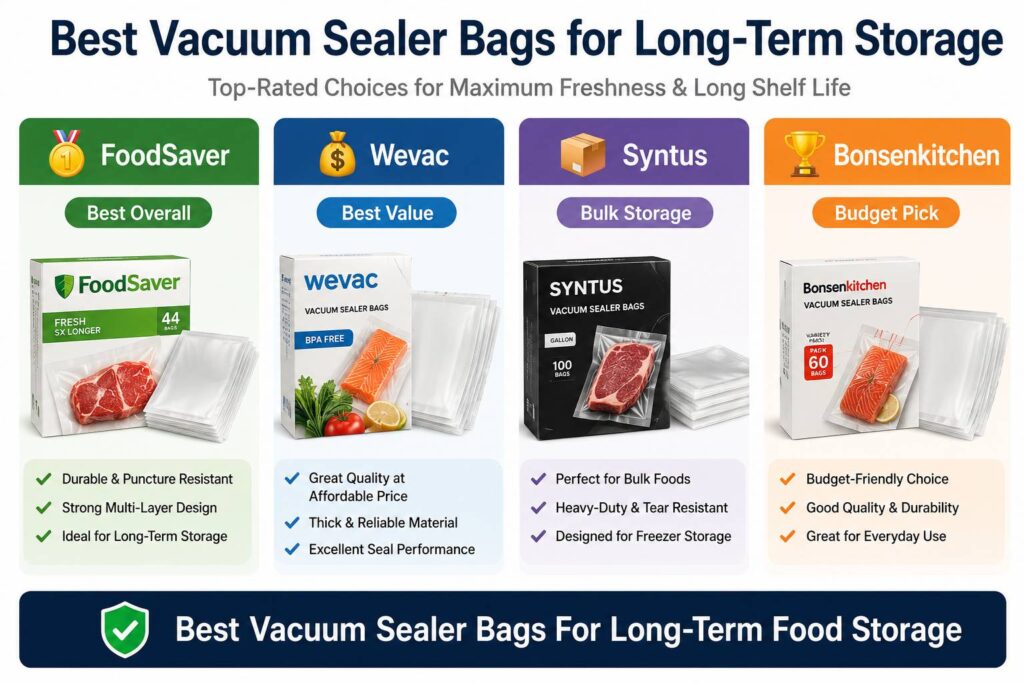
The best vacuum sealer bags for long-term storage are designed with thicker materials, stronger seals, and better puncture resistance. These features help reduce freezer burn, prevent air leaks, and keep food fresh for longer periods.
Here are some of the top-rated vacuum sealer bags in 2026:
🥇 FoodSaver Vacuum Sealer Bags
Best Overall for Long-Term Storage
🥈 Wevac Vacuum Sealer Bags
Best Value for Money
🥉 Syntus Vacuum Sealer Bags
Best for Bulk Food Storage
🏆 Bonsenkitchen Vacuum Sealer Bags
Best Budget-Friendly Option
When properly sealed and stored in the freezer, these vacuum sealer bags can help preserve meat, fish, vegetables, and other foods for up to several years while maintaining quality and freshness.
Frequently Asked Questions
How Long Does Vacuum-Sealed Food Last in the Freezer?
The answer depends on the type of food. In general, vacuum sealing can significantly extend freezer storage time. Beef and chicken may last up to 3 years, fish up to 2 years, and vegetables up to 3 years when properly vacuum sealed and frozen.
Does Vacuum Sealing Prevent Food From Spoiling?
No. Vacuum sealing slows down spoilage by removing oxygen, but it does not stop bacteria growth completely. Food should still be stored at safe refrigerator or freezer temperatures.
Can Vacuum-Sealed Food Last Forever?
No. While vacuum sealing extends shelf life, food quality gradually declines over time. For the best taste and texture, consume vacuum-sealed foods within the recommended storage periods.
What Foods Benefit Most From Vacuum Sealing?
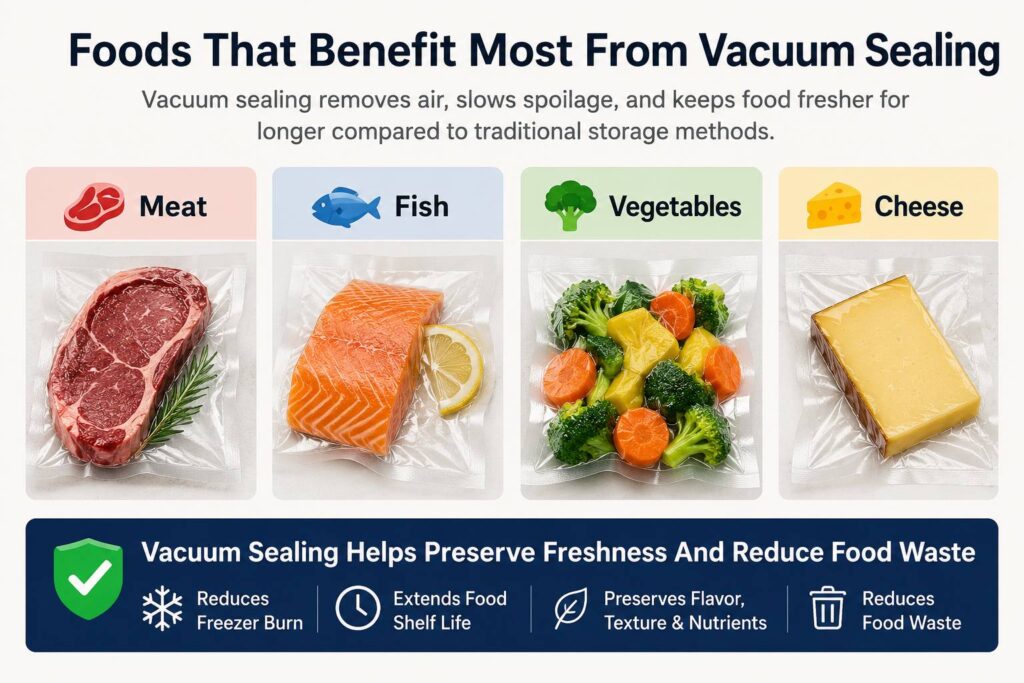
Meat, fish, vegetables, cheese, coffee beans, and bulk dry foods benefit the most because vacuum sealing reduces exposure to oxygen and moisture.
Is Vacuum-Sealed Food Safe To Eat After Two Years?
If the food has remained frozen, the seal is intact, and there are no signs of freezer burn or spoilage, vacuum-sealed food may still be safe after two years. However, quality can vary depending on storage conditions.
Do Vacuum Sealer Bags Affect Storage Time?
Yes. High-quality vacuum sealer bags provide stronger seals and better puncture resistance, helping food stay fresh longer during long-term storage.
Final Verdict
So, how long does vacuum-sealed food last?
For most foods, vacuum sealing can dramatically extend storage life compared to traditional storage methods. Meat can last up to 3 years in the freezer, fish up to 2 years, vegetables up to 3 years, and many other foods stay fresh much longer when properly vacuum sealed.
However, vacuum sealing is not a magic solution. Storage temperature, seal quality, and the type of food all play important roles in determining how long vacuum-sealed food lasts.
To maximize freshness and reduce food waste:
- Use high-quality vacuum sealer bags
- Remove as much air as possible
- Store foods at safe temperatures
- Check seals regularly for leaks
If your goal is long-term food storage, meal prep, or reducing freezer burn, vacuum sealing remains one of the most effective food preservation methods available for home use.
The bottom line: vacuum-sealed food lasts significantly longer than traditionally stored food, making vacuum sealing a smart investment for most households.
Ready to keep your food fresh for months or even years?
Choosing the right vacuum sealer bags can make a huge difference in preventing freezer burn, maintaining food quality, and maximizing storage life.
Check out our top-rated vacuum sealer bags for long-term food storage and find the best option for your budget and needs.
👉 View Our Recommended Vacuum Sealer Bags